Why Children’s Eye Care Is Different | Pediatric Ophthalmologist in Varanasi
Children’s eyes need specialized care. Learn why pediatric eye care is different and meet Dr Manisha Mishra, senior cataract & squint surgeon and pediatric ophthalmologist in Varanasi.
Why Children’s Eye Care Is Different: Understanding Pediatric Ophthalmology
When an adult develops a vision problem, they can usually describe what they are experiencing. A child may simply say that they cannot see properly—or may not complain at all.
This is one of the most important reasons children’s eye care is different from adult eye care.
A child’s visual system is still developing. Conditions such as squint (strabismus), lazy eye (amblyopia), significant refractive errors, congenital or pediatric cataract, and other eye disorders can interfere with normal visual development. Early identification and appropriate treatment can therefore be particularly important during childhood.
At Shantanu Netralaya Eye Hospital, Varanasi, pediatric eye care is approached with this understanding. Dr Manisha Mishra, Senior Cataract & Squint Surgeon and Pediatric Ophthalmologist, provides specialized care for children as well as patients requiring squint, pediatric and complex cataract services.
Why Is Pediatric Eye Care Different?
A child is not simply a “small adult.”
Children’s eyes and visual pathways continue to develop during the early years of life. Because of this, an eye problem that appears relatively minor may have a greater impact on a child's long-term visual development than it would in an adult.
Pediatric ophthalmology combines knowledge of eye disease, visual development, child-friendly examination techniques and appropriate surgical management.
The goal is not only to determine whether a child can see today, but also to identify problems that could interfere with healthy vision development.
Children May Not Know That Their Vision Is Abnormal
Adults often recognize that their vision has changed because they remember what normal vision looks like for them.
Young children may not have the same reference point.
A child with reduced vision in one eye may continue to use the better eye and behave normally. Parents may therefore have no obvious indication that there is a problem.
Some children may also adapt by:
Sitting very close to the television
Holding books or mobile devices unusually close
Tilting or turning their head
Closing one eye in bright light
Frequently rubbing their eyes
Struggling with reading or schoolwork
Bumping into objects
Complaining of headaches or eye strain
Avoiding visually demanding activities
These signs do not always mean that a serious eye disorder is present, but they can be reasons to have a child’s eyes evaluated.
Squint in Children: More Than Just an Appearance Issue
One of the important conditions managed by a pediatric ophthalmologist and squint surgeon is strabismus, commonly called squint.
In squint, the two eyes do not remain properly aligned. One eye may turn inward, outward, upward or downward.
Parents sometimes consider squint primarily a cosmetic concern. However, depending on the type and timing of the condition, abnormal eye alignment can also be associated with problems in binocular vision and amblyopia.
That is why evaluation of a child with squint should consider more than the appearance of the eyes.
A pediatric ophthalmologist can assess:
Eye alignment
Eye movements
Visual acuity
Refractive error
Binocular function
Presence of amblyopia
The type and pattern of strabismus
Whether surgery or non-surgical treatment may be appropriate
Treatment depends on the individual child. It may include spectacles, amblyopia management, observation, or squint surgery when indicated.
Lazy Eye (Amblyopia) Needs Attention During Visual Development
Amblyopia, commonly called lazy eye, occurs when normal visual development is disrupted, resulting in reduced vision that cannot simply be corrected by prescribing glasses alone.
It can be associated with conditions such as:
Significant difference in spectacle power between the two eyes
Squint
Uncorrected refractive error
Cataract or other conditions that obstruct or significantly reduce vision during development
The important point is that amblyopia is a developmental problem.
Treatment is therefore different from simply giving an adult a pair of glasses. Depending on the cause, treatment may involve appropriate spectacles, patching or other amblyopia therapy, and addressing the underlying eye condition.
The earlier the problem is recognized, the more opportunity there may be to support normal visual development.
Pediatric Cataract Requires Specialized Evaluation
Cataract is usually associated with older adults, but children can also develop cataract.
A cataract in a child can be present from birth or develop later for different reasons. Because a developing visual system depends on receiving a clear visual image, a visually significant pediatric cataract may require timely specialist assessment.
Pediatric cataract surgery is not simply adult cataract surgery performed on a smaller eye.
The decision-making process can involve considerations such as:
The child’s age
Cataract characteristics
Visual development
One or both eyes being affected
Associated eye conditions
Refractive correction
Intraocular lens considerations
Long-term follow-up
This is why children with cataract are best evaluated by an ophthalmologist experienced in pediatric eye care and pediatric cataract management.
Children Need a Different Examination Approach
An adult can sit at a slit lamp, read an eye chart and describe symptoms.
Examining a young child may require a completely different approach.
Depending on the child's age and cooperation, the ophthalmologist may use age-appropriate visual assessment techniques, eye alignment tests, refraction and other examinations.
In some children, additional testing or examination under appropriate conditions may be required to obtain reliable information.
The examination therefore involves not just technology, but also experience, patience and the ability to communicate with children.
When Should Parents Take a Child for an Eye Check-Up?
Parents should consider an eye examination if they notice:
An eye turning in or out
Persistent head tilting
Frequent closing of one eye
Difficulty seeing the board or reading
Abnormal visual behavior
Difficulty with coordination or visually demanding activities
A white or unusual reflection in the pupil
Persistent eye discomfort or unusual visual symptoms
A known family history of certain eye disorders
Any concern about the child's vision
A child does not necessarily need to have obvious symptoms to benefit from an eye assessment, particularly when there are known risk factors.
Meet Dr Manisha Mishra: Pediatric Ophthalmologist and Squint Surgeon in Varanasi
Dr Manisha Mishra is a Senior Cataract & Squint Surgeon and Pediatric Ophthalmologist associated with Shantanu Netralaya Eye Hospital, Varanasi.
Her clinical practice includes specialized care for:
Pediatric Ophthalmology
Evaluation and management of eye and vision problems in children, with emphasis on visual development and age-appropriate assessment.
Squint & Strabismus
Evaluation and treatment of children and adults with abnormal eye alignment, including cases where surgical correction may be required.
Pediatric Cataract
Assessment and surgical management of cataract in children, where individualized treatment and long-term visual planning are important.
Complex Cataract Surgery
Care of patients requiring more specialized cataract evaluation and surgical planning.
The approach is specialist-led and patient-focused: the aim is to understand the individual patient, identify the actual problem and recommend treatment based on clinical need rather than a one-size-fits-all approach.
Why Choose Specialist Pediatric Eye Care?
Choosing a pediatric ophthalmologist can be particularly valuable when a child has a condition involving visual development, eye alignment or pediatric cataract.
Specialist pediatric eye care brings together:
Early detection + developmental understanding + appropriate treatment + long-term follow-up
The objective is not simply to make the eyes look normal or improve vision temporarily. It is to protect and support the child's visual development as effectively as possible.
Pediatric Eye Care in Varanasi and Purvanchal
Families from Varanasi, Kashi and across Purvanchal may require access to specialized pediatric ophthalmology and squint services.
At Shantanu Netralaya Eye Hospital, specialist ophthalmology services are provided with a focus on modern technology, surgical expertise and ethical, individualized patient care.
For children with squint, suspected lazy eye, pediatric cataract or other concerns about visual development, an appropriate ophthalmic evaluation can help determine what treatment, if any, is required.
Frequently Asked Questions
What is a pediatric ophthalmologist?
A pediatric ophthalmologist is an ophthalmologist with specialized expertise in evaluating and treating eye and vision problems in children, including conditions affecting visual development, eye alignment and pediatric cataract.
At what age should a child have an eye examination?
The appropriate timing depends on the child's age, symptoms and risk factors. Children with symptoms, abnormal eye alignment, developmental concerns or a family history of certain eye conditions may require earlier specialist assessment.
Is squint in children treatable?
Many forms of childhood squint can be managed. Treatment depends on the type and cause of the squint and may include spectacles, amblyopia treatment, observation or squint surgery.
Is pediatric cataract different from adult cataract?
Yes. Cataract in a child can interfere with visual development, so evaluation and treatment require consideration of the child's age, visual development, cataract characteristics and long-term visual needs.
Who is a pediatric ophthalmologist and squint surgeon in Varanasi?
Dr Manisha Mishra is a Senior Cataract & Squint Surgeon and Pediatric Ophthalmologist associated with Shantanu Netralaya Eye Hospital, Varanasi, providing pediatric ophthalmology, squint/strabismus, pediatric cataract and complex cataract care.
The Right Time to Take a Child's Vision Seriously
Children often cannot tell us that something is wrong with their vision.
That is why parents, teachers and healthcare professionals have an important role in recognizing unusual visual behavior and arranging an appropriate eye examination when needed.
Good pediatric eye care is about more than checking whether a child can read an eye chart. It is about understanding how the child's vision is developing—and identifying problems early enough to make a meaningful difference.
For specialized pediatric ophthalmology, squint and pediatric cataract care in Varanasi, Dr Manisha Mishra provides specialist-led evaluation and treatment at Shantanu Netralaya Eye Hospital.
This article is for patient education. It is not a substitute for personalised medical advice, examination or diagnosis. If you have symptoms discussed here, please book an in-person consultation with a qualified ophthalmologist.
Dr. Shantanu personally reviews every enquiry — usually within a few hours.
Message on WhatsApp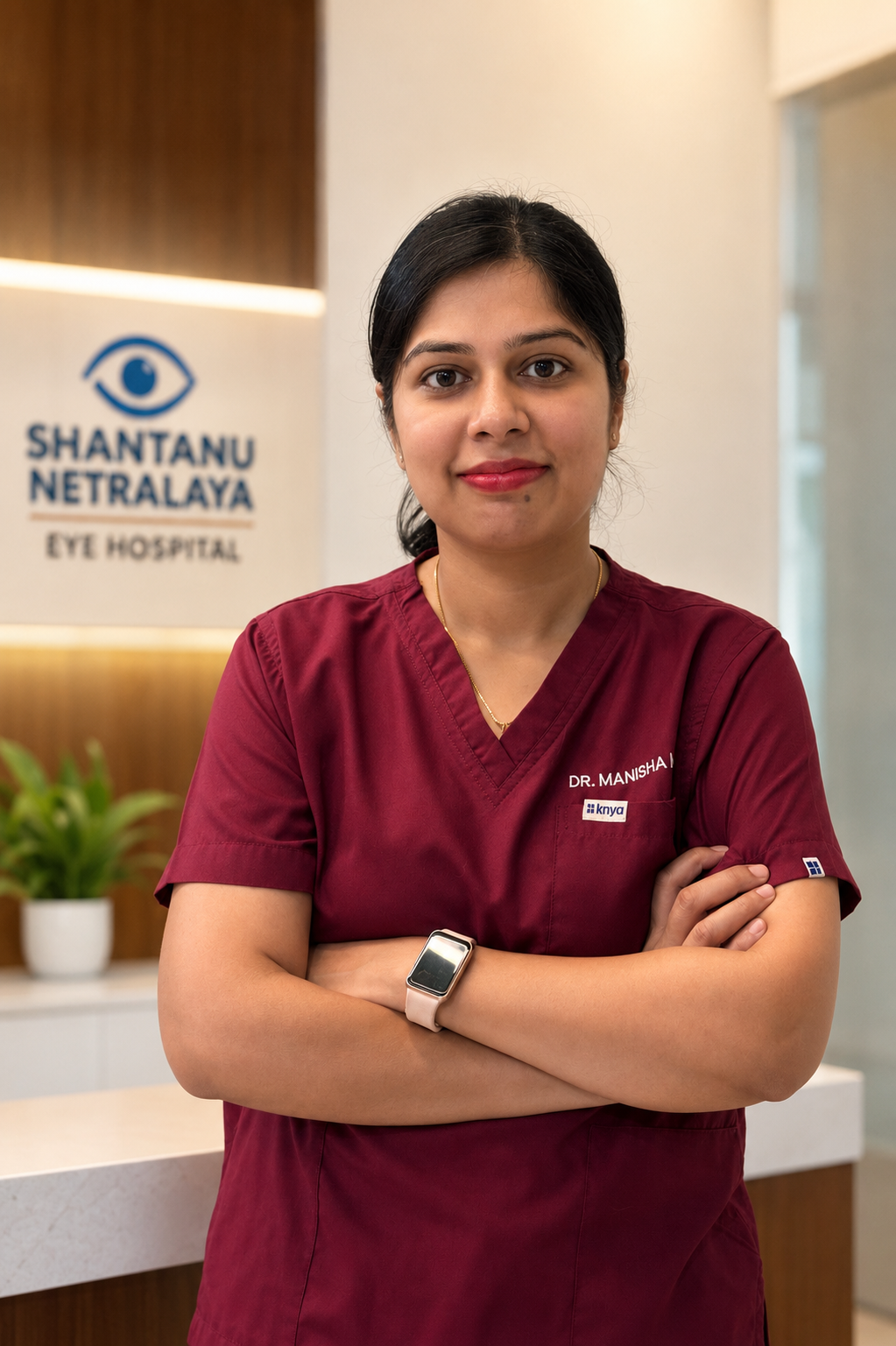
Consultant Ophthalmologist at Shantanu Netralaya Eye Hospital, Varanasi. MBBS Gold Medalist with 4 distinctions; MS Ophthalmology from Maulana Azad Medical College & Guru Nanak Eye Centre, New Delhi. Handles complex cataract, squint (strabismus) and paediatric ophthalmology.
Related articles
Services related to this article
Bladeless, stitchless cataract surgery — MAMC-trained precision, delivered in Varanasi.
When routine cataract surgery isn't enough — MAMC-trained expertise for the difficult case.
Cosmetic and functional squint correction — for children, teens and adults.