Not Every Squint Needs Surgery | Strabismus Treatment in Varanasi
Does every squint need surgery? Learn about accommodative esotropia, paralytic squint, amblyopia and individualised strabismus treatment with Dr. Manisha Mishra, Varanasi.
Not Every Squint Needs Surgery: The Importance of Accurate Diagnosis and Individualised Treatment
Squint (Strabismus) is not a single disease with a single treatment. A child whose eyes turn inward may need only spectacles, while an adult with paralytic squint may require complex extraocular muscle surgery. The difference lies in accurate diagnosis.
One of the most important principles in strabismus management is that surgery should never be recommended merely because an eye appears deviated.
Behind every squint lies a clinical diagnosis. The deviation may be related to refractive error, abnormal binocular vision, muscle imbalance, cranial nerve dysfunction, mechanical restriction or a combination of these factors.
Understanding the underlying mechanism is essential before deciding whether a patient needs spectacles, amblyopia treatment, prism correction, observation or surgery.
At Shantanu Netralaya Eye Hospital, Varanasi, Dr. Manisha Mishra leads the squint and pediatric ophthalmology services, with an emphasis on accurate diagnosis, appropriate non-surgical management and individualised surgical planning.
This article discusses the clinical approach to squint, common diagnostic challenges and why a surgery-first approach is not always appropriate.
Squint Is a Clinical Diagnosis, Not Just an Abnormal Eye Appearance
Strabismus refers to the misalignment of the visual axes of the two eyes.
It may present as:
Esotropia – inward deviation.
Exotropia – outward deviation.
Hypertropia – upward deviation.
Hypotropia – downward deviation.
Intermittent strabismus – deviation that appears only under certain circumstances.
However, identifying the direction of deviation is only the beginning of the examination.
Two patients with apparently identical inward squint may have entirely different underlying conditions.
Consider the following examples:
A child with accommodative esotropia may achieve complete correction with appropriate hypermetropic spectacles.
A child with partially accommodative esotropia may retain a significant residual deviation despite full spectacle correction and may require surgery.
An adult with sixth nerve palsy may have esotropia associated with abduction limitation and diplopia.
A patient with restrictive strabismus may have mechanical limitation of eye movements requiring a different surgical strategy.
Therefore, the first question should not be whether the patient needs surgery.
The first question should be: What is causing the deviation?
Why Accurate Diagnosis Is More Important Than Early Surgical Intervention
One of the avoidable problems in squint management is recommending surgery without adequately evaluating refractive error, amblyopia and the underlying mechanism of deviation.
A comprehensive evaluation should establish:
The type of strabismus.
The magnitude of deviation.
Whether the deviation is constant or intermittent.
Whether refractive error contributes to the squint.
Whether amblyopia is present.
The status of binocular vision and sensory fusion.
Extraocular muscle function.
Whether there is an underlying neurological or restrictive cause.
The treatment plan should be based on these findings.
For example, operating on a child with accommodative esotropia without first providing appropriate spectacle correction may result in unnecessary surgery or an inappropriate surgical target.
Similarly, paralytic and restrictive squint should not be approached using the same principles as routine concomitant strabismus.
Clinical Case 1: Accommodative Esotropia Corrected Completely with Glasses
One of the best examples of why every squint does not require surgery is accommodative esotropia.
A child presents with inward deviation of one or both eyes. The parents are understandably concerned about the appearance of the eyes and may expect an operation to be necessary.
However, cycloplegic refraction reveals significant hypermetropia.
In accommodative esotropia, accommodation associated with focusing effort is accompanied by convergence, which may result in inward deviation of the eyes.
Appropriate hypermetropic spectacle correction reduces the accommodative demand and may significantly improve or completely correct the deviation.
The key clinical principle is to identify and correct the accommodative component before considering surgery.
Our clinical case library includes a child with accommodative esotropia in whom the squint was completely corrected with glasses.
Read the clinical case of accommodative esotropia corrected with spectacles.
This is an important example of why cycloplegic refraction should not be overlooked in the evaluation of childhood squint.
When Does Accommodative Esotropia Require Surgery?
Not every child with accommodative esotropia will respond completely to glasses.
In partially accommodative esotropia, spectacle correction reduces the accommodative component, but a residual non-accommodative deviation remains.
If the residual deviation is clinically significant, surgery may be considered after appropriate assessment.
The surgical target should be determined with the patient wearing the appropriate refractive correction.
Clinical Case 2: Sixth Nerve Palsy and Paralytic Squint
Paralytic squint represents a different diagnostic and therapeutic challenge.
The sixth cranial nerve supplies the lateral rectus muscle, which abducts the eye.
When the nerve is affected, the lateral rectus becomes weak or paralysed, resulting in reduced abduction and an inward deviation of the affected eye.
Patients commonly complain of horizontal diplopia, particularly when looking towards the affected side.
Important clinical considerations include:
Presence and extent of abduction limitation.
Primary position deviation.
Variation in deviation across different gazes.
Duration of the palsy.
Associated neurological symptoms.
Possible underlying cause.
Stability of the deviation.
In acute sixth nerve palsy, the priority is identifying and managing the underlying cause.
Prism correction, occlusion and other temporary measures may be considered for symptomatic relief in selected patients.
Surgical intervention is generally considered after sufficient time has been allowed for recovery and the deviation has become stable, although timing must be individualised.
Surgical Management of Long-Standing Sixth Nerve Palsy
Surgery in paralytic squint is different from routine recession-resection procedures.
Depending on the residual lateral rectus function and severity of deviation, options may include:
Medial rectus recession.
Lateral rectus resection in selected cases with residual function.
Vertical rectus muscle transposition procedures.
Other tailored extraocular muscle procedures.
The surgical plan must be based on detailed assessment of muscle function and the pattern of deviation.
Dr. Manisha Mishra has managed a published case of long-standing sixth nerve palsy with surgical correction at Shantanu Netralaya.
Explore the clinical case library featuring paralytic squint and strabismus surgery.
Clinical Case 3: Recurrent and Previously Operated Squint
Patients who have undergone previous squint surgery may continue to have residual deviation or develop recurrent strabismus over time.
These cases require a different level of assessment.
Previous surgical details, current ocular alignment, muscle function and sensory status should be evaluated carefully.
Important considerations include:
Previous muscles operated upon.
Previous recession or resection amounts, if available.
Current deviation in primary position and different gazes.
Presence of restrictive adhesions.
Diplopia and sensory adaptation.
Residual muscle function.
Blindly repeating the original surgical procedure may not be appropriate.
A new surgical plan should be developed according to the present anatomical and functional findings.
Selected patients may benefit from repeat squint surgery, while others may be managed with prisms or observation.
What Should a Comprehensive Squint Examination Include?
A proper squint evaluation involves more than observing whether an eye turns inward or outward.
The examination should systematically assess ocular alignment, refractive status, extraocular muscle function and binocular vision.
1. Detailed History
Important questions include:
When was the deviation first noticed?
Was it present since birth or developed later?
Is it constant or intermittent?
Does it become more prominent during fatigue?
Is there associated double vision?
Has the patient previously used spectacles?
Is there a history of previous squint surgery?
Is there any history of trauma or neurological illness?
Sudden-onset squint in an adult deserves particular attention, especially when associated with diplopia or neurological symptoms.
2. Visual Acuity Assessment
Visual acuity should be measured separately in each eye.
This helps identify unequal vision, amblyopia and associated ocular disease.
In young children, age-appropriate visual acuity testing is important.
3. Cycloplegic Refraction
Cycloplegic refraction is particularly important in children with esotropia.
It helps identify significant hypermetropia and other refractive errors that may contribute to the deviation.
Appropriate spectacle correction should generally be established before deciding on surgery in accommodative or partially accommodative esotropia.
4. Measurement of Deviation
The magnitude of deviation should be measured accurately.
Common clinical tests include:
Hirschberg test.
Krimsky test.
Cover-uncover test.
Alternate cover test.
Prism cover test.
Near and distance deviation measurements.
Measurements in different gazes may be required in incomitant and paralytic strabismus.
5. Extraocular Muscle Evaluation
Ocular movements should be assessed in all directions of gaze.
This includes:
Ductions.
Versions.
Abduction and adduction.
Elevation and depression.
Muscle underactions and overactions.
Restriction of movement.
Abnormal head posture.
These findings are essential in distinguishing concomitant from paralytic and restrictive strabismus.
6. Binocular Vision and Sensory Assessment
The sensory status of the patient can influence both treatment planning and postoperative expectations.
Assessment may include:
Worth four-dot testing.
Stereopsis testing.
Suppression assessment.
Fusion evaluation.
Diplopia assessment.
Not every patient with anatomically improved alignment will regain normal binocular vision.
This distinction is particularly important when counselling adults with long-standing squint.
7. Anterior and Posterior Segment Examination
A comprehensive eye examination is necessary to identify associated conditions that may contribute to reduced vision or abnormal ocular alignment.
Additional neurological evaluation and imaging may be necessary in selected patients, particularly with acute-onset or unexplained paralytic strabismus.
When Is Squint Surgery Indicated?
Squint surgery is considered when the deviation is clinically significant and non-surgical treatment is insufficient or unsuitable.
Common indications include:
Accommodative and partially accommodative esotropia: Significant residual deviation despite appropriate spectacle correction.
Non-accommodative esotropia: Inward deviation that does not adequately respond to refractive correction.
Intermittent exotropia: Poorly controlled or significant deviation associated with functional or sensory concerns.
Constant exotropia: Persistent outward deviation where surgical correction is clinically appropriate.
Paralytic strabismus: Selected patients with stable residual deviation after assessment of the underlying neurological condition.
Restrictive strabismus: Selected cases involving mechanical restriction, trauma or thyroid-associated eye disease.
Adult and long-standing squint: Patients seeking improvement in alignment, diplopia or quality of life.
The indication and timing should always be individualised.
Understanding Squint Surgery: Recession and Resection
Most conventional squint surgeries involve adjusting the position or effective pulling force of extraocular muscles.
Muscle Recession
In recession, the muscle is detached from its original insertion and reattached further back.
This reduces its effective pulling action.
Muscle Resection
In resection, a segment of the muscle is shortened before it is reattached, increasing its effective pulling action.
The choice of procedure depends on the type of squint, angle of deviation, muscle function and previous surgical history.
Some patients require surgery on one eye, while others may require bilateral procedures.
Complex paralytic and restrictive cases may require specialised muscle transposition procedures.
Can Adults with Long-Standing Squint Benefit from Surgery?
Yes.
A common misconception is that squint can only be treated during childhood.
Adults with long-standing squint can also undergo surgical correction after appropriate evaluation.
Potential benefits include:
Improved eye alignment.
Better cosmetic appearance.
Improvement in abnormal head posture in selected patients.
Reduction in diplopia in suitable cases.
Improved confidence and quality of life.
However, alignment and binocular vision are not the same.
Patients with long-standing suppression or absent sensory fusion may achieve satisfactory alignment without regaining normal stereopsis.
Counselling should therefore focus on realistic, individualised expectations.
Does Squint Surgery Guarantee Perfect Alignment?
No surgical procedure can guarantee perfect alignment in every patient.
The outcome depends on several factors:
Type and magnitude of deviation.
Duration of squint.
Muscle function.
Previous surgery.
Neurological or restrictive pathology.
Sensory adaptation.
Individual healing response.
Undercorrection, overcorrection and recurrence are possible.
Some patients may require additional treatment or repeat surgery.
The purpose of proper surgical planning is to maximise the chance of a satisfactory outcome while minimising complications.
Squint Treatment in Varanasi: Specialist Care with an Individualised Approach
Squint management requires specialised knowledge of ocular motility, binocular vision, pediatric visual development and extraocular muscle surgery.
At Shantanu Netralaya Eye Hospital, Varanasi, squint and pediatric ophthalmology services are led by Dr. Manisha Mishra.
Her academic qualifications include MBBS from Mahatma Gandhi Medical College, Indore, MS Ophthalmology from Maulana Azad Medical College, New Delhi, DNB and FICO (Merit).
She received four academic distinctions during her MBBS training and completed postgraduate ophthalmology training at MAMC and Guru Nanak Eye Centre, New Delhi.
Her clinical interests include:
Pediatric strabismus.
Adult squint.
Accommodative and non-accommodative esotropia.
Intermittent and constant exotropia.
Paralytic squint.
Amblyopia management.
Complex and recurrent squint.
Pediatric refractive errors.
Patient Education: Squint Simplified
Medical treatment should be supported by patient education.
Parents frequently receive conflicting advice about whether squint needs surgery, whether spectacles can correct it, or whether treatment is useful after childhood.
To address these concerns, Dr. Manisha Mishra authored Squint Simplified: A Complete Guide for Patients, edited by Dr. Shantanu Kumar Gupta.
The book covers:
Types and causes of squint.
How normal binocular vision works.
Importance of early diagnosis.
Role of spectacles.
Amblyopia and patch therapy.
Prism glasses and eye exercises.
Surgical treatment.
Common myths and frequently asked questions.
Explore Squint Simplified: A Complete Guide for Patients.
Final Clinical Perspective
The management of squint should never be reduced to a simple decision about whether an operation is required.
A child with accommodative esotropia may need spectacles rather than surgery. A child with amblyopia may need visual rehabilitation. An adult with sixth nerve palsy may require a detailed neurological assessment and specialised muscle surgery.
These are fundamentally different clinical situations.
The quality of squint treatment depends first on the quality of diagnosis.
At Shantanu Netralaya, Varanasi, our approach is to identify the underlying cause, consider appropriate non-surgical treatment and recommend surgery only when clinically indicated.
For patients and families seeking an expert evaluation or a second opinion regarding squint treatment, Dr. Manisha Mishra provides specialist consultation for children and adults.
Consultation
Dr. Manisha Mishra
Senior Consultant – Squint & Pediatric Ophthalmology, Senior Cataract Surgeon
MBBS (Gold Medalist) · MS (MAMC, New Delhi) · DNB · FICO (Merit)
Shantanu Netralaya Eye Hospital
40, Deen Dayal Colony, Kabir Nagar Road, Near Durgakund, Varanasi – 221005.
Phone: +91 83186 65154
WhatsApp: +91 79058 54244
Serving Varanasi, Purvanchal and neighbouring districts.
Medical Disclaimer: This article is intended for patient education and clinical awareness. Individual diagnosis and treatment decisions require a comprehensive ophthalmic examination. Surgical suitability and expected outcomes vary according to the patient's condition.
This article is for patient education. It is not a substitute for personalised medical advice, examination or diagnosis. If you have symptoms discussed here, please book an in-person consultation with a qualified ophthalmologist.
Dr. Shantanu personally reviews every enquiry — usually within a few hours.
Message on WhatsApp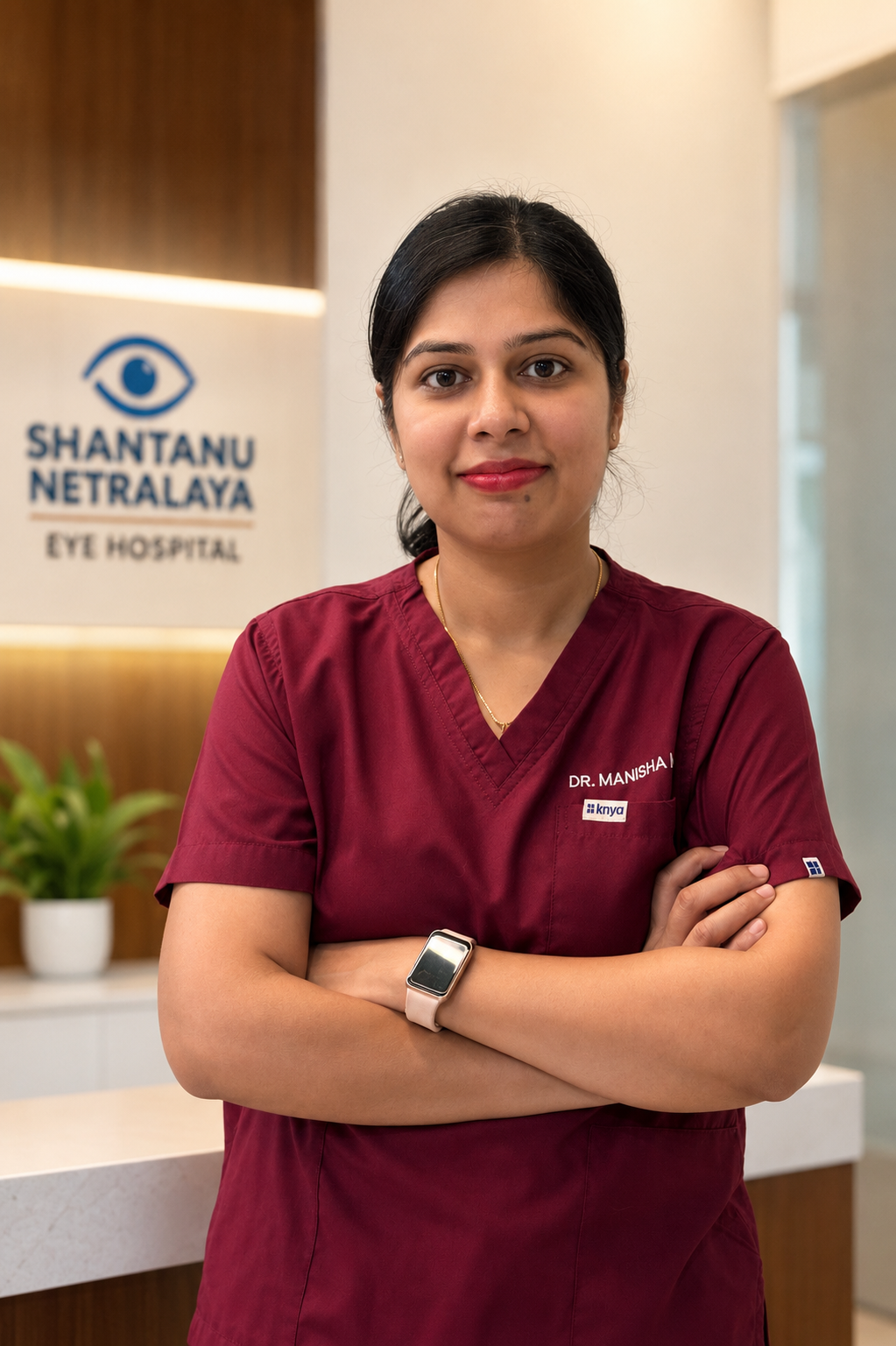
Consultant Ophthalmologist at Shantanu Netralaya Eye Hospital, Varanasi. MBBS Gold Medalist with 4 distinctions; MS Ophthalmology from Maulana Azad Medical College & Guru Nanak Eye Centre, New Delhi. Handles complex cataract, squint (strabismus) and paediatric ophthalmology.