Best Eye Doctor in Varanasi (2026 Guide) | Dr. Shantanu Gupta | Shantanu Netralaya
Searching for the best eye doctor in Varanasi? Learn how to choose the right eye specialist and discover why families across Purvanchal trust Dr. Shantanu Gupta and the team at Shantanu Netralaya Eye Hospital.
# Best Eye Doctor in Varanasi: A Complete Guide to Choosing the Right Eye Specialist for You and Your Family (2026)
Your Eyes Deserve More Than Just Good Vision—They Deserve the Right Doctor
If you searched "Best Eye Doctor in Varanasi", you are probably looking for much more than a name on Google.
Perhaps your father has been advised cataract surgery.
Maybe your mother has diabetes and recently noticed blurred vision.
Your child may be sitting too close to the television, rubbing their eyes repeatedly, or struggling to see the classroom board.
Or maybe you have suddenly noticed floaters, flashes of light, redness, or a decrease in vision that has left you worried.
Whatever brought you here, one thing is certain—you are looking for someone you can trust with something priceless: your eyesight.
As ophthalmologists, we meet patients every day who tell us,
*"Doctor saab, bas kisi achhe doctor ke paas aa gaye hain. Aankhon ka maamla hai, risk nahi lena chahte."*
That single sentence reflects what almost every family in Varanasi and across Purvanchal feels.
Eyes are different from almost every other organ. A delay in diagnosis, an incorrect treatment, or ignoring symptoms for too long can sometimes lead to permanent vision loss. At the same time, modern ophthalmology has advanced tremendously. Conditions that once caused blindness can now often be treated successfully—provided they are diagnosed at the right time by the right specialist.
This guide has been written to help you make an informed decision.
Not to convince you through advertisements.
Not to promise miracles.
But to explain, honestly and transparently, what truly matters when choosing an eye doctor.
---
# Why Choosing the Right Eye Doctor Matters More Than Ever
Twenty years ago, eye care was comparatively straightforward.
Most people visited an eye hospital only for cataracts or spectacles.
Today, ophthalmology has evolved into one of the most technologically advanced branches of medicine.
Doctors now diagnose retinal diseases using high-resolution imaging, perform cataract surgery through tiny incisions, treat diabetic blindness with precise retinal lasers and intravitreal injections, and manage childhood eye disorders that can affect lifelong vision if left untreated.
In simple words, eye care has become more specialized than ever before.
Choosing the right ophthalmologist is no longer about finding the nearest clinic. It is about finding someone whose expertise matches your specific condition.
---
# The Question We Hear Every Day
Patients often ask us,
"Doctor, who is the best eye doctor in Varanasi?"
It is a perfectly reasonable question.
However, the answer may surprise you.
The best eye doctor is not necessarily the one with the biggest advertisement.
Not the one with the tallest building.
Not even the one with the highest number of social media followers.
The right eye doctor is someone who combines knowledge, experience, modern technology, ethical decision-making, careful planning, and genuine concern for every patient's long-term vision.
In reality, different eye problems require different expertise.
Someone with diabetic retinopathy needs a retina specialist.
A child with squint benefits from a pediatric ophthalmologist and squint surgeon.
A patient with advanced cataract should choose an experienced cataract surgeon who performs modern surgery with careful planning.
The key is finding the right expertise for your particular condition.
---
# What Should You Look for in an Eye Doctor?
When families from Varanasi, Chandauli, Ghazipur, Jaunpur, Mirzapur, Bhadohi, Sonbhadra, Ballia, Mau, and surrounding districts visit our hospital, we encourage them to evaluate any eye specialist—not just us—using a few important principles.
These questions can help you make a more informed decision.
---
1. Does the Doctor Listen Before Recommending Treatment?
Good medical care begins with listening.
Your symptoms tell a story.
When did the vision change?
Is it affecting one eye or both?
Do you have diabetes or high blood pressure?
Have you undergone previous eye surgery?
What kind of work do you do?
Do you drive at night?
All these details influence diagnosis and treatment.
Patients often tell us that what reassures them most is not how quickly a prescription is written, but how carefully their concerns are heard.
A consultation should never feel rushed.
---
2. Does the Hospital Have Modern Diagnostic Facilities?
Many serious eye diseases develop silently.
Glaucoma is often called the "silent thief of sight" because vision loss may occur before symptoms appear.
Diabetic retinopathy can damage the retina long before patients notice blurred vision.
Macular diseases may initially affect only fine vision, making them easy to overlook.
Modern investigations help detect these problems at an earlier stage.
A well-equipped eye hospital should ideally have access to advanced diagnostic tools such as:
* Optical Coherence Tomography (OCT) * Optical Biometry for cataract surgery planning * Digital Fundus Photography * B-Scan Ultrasound * Automated Visual Field Testing * High-quality Operating Microscopes * Modern Phacoemulsification Systems * Retinal Laser Facilities
Technology does not replace clinical judgment—but it greatly enhances diagnostic accuracy and surgical planning.
---
3. Does the Doctor Explain the Diagnosis Clearly?
One of the biggest frustrations patients experience is leaving a consultation without understanding what their eye problem actually is.
You should never feel embarrassed to ask questions such as:
* What exactly is wrong with my eye? * Why has this happened? * Is treatment urgent? * What are my options? * What happens if I wait? * What are the benefits and possible risks?
A good ophthalmologist welcomes these questions.
Patients who understand their condition are usually more confident, less anxious, and better prepared to participate in their own care.
---
4. Is Treatment Individualized?
No two patients are exactly alike.
Consider cataract surgery.
A retired individual who mostly reads at home may have different visual priorities from a young businessman who spends hours driving or working on computers.
Similarly, a patient with diabetes, glaucoma, or previous eye surgery may require a different surgical plan compared with someone without these conditions.
The best treatment plan is not the same for everyone.
It is the one that fits your eyes, your health, and your lifestyle.
---
5. Experience Matters—Especially When the Unexpected Happens
Modern technology has made eye surgery remarkably safe.
However, every surgery presents unique challenges.
Dense cataracts.
Small pupils.
Weak zonules.
Previous eye injuries.
Diabetic retinal disease.
High myopia.
These situations require careful judgment and experience.
While no surgeon can promise a perfect outcome in every case, experience often helps in anticipating challenges, making timely decisions, and managing unexpected situations calmly.
For patients, this provides reassurance that they are in capable hands.
---
# Why Expertise Is More Important Than Advertising
Today's patients are exposed to endless advertisements.
Every hospital claims to have advanced technology.
Every website claims excellent care.
Every social media page says they are the best.
But healthcare is different from shopping for a mobile phone or a television.
The decision should not be based solely on the loudest advertisement.
Instead, ask yourself:
* Does the doctor regularly manage my specific eye condition? * Does the hospital explain treatment honestly? * Do I feel comfortable asking questions? * Is there transparency regarding investigations and procedures? * Am I being treated as a person or simply as another patient in a long queue?
These answers often matter more than marketing slogans.
---
# Eye Care Has Changed—Patients Should Know It Too
Many people still believe that all eye hospitals provide the same treatments.
This is no longer true.
Modern ophthalmology has transformed dramatically over the past decade.
Today, careful pre-operative planning, advanced imaging, precision lens calculations, minimally invasive surgery, retinal injections, and laser treatments have significantly improved the ability to preserve and restore vision in many conditions.
At the same time, technology is only as effective as the hands and judgment guiding it.
The best outcomes usually come from combining advanced equipment with thoughtful clinical decision-making, meticulous planning, and compassionate patient care.
---
# A Message to Families Across Varanasi and Purvanchal
Whether you live in Varanasi city or travel from Jaunpur, Ghazipur, Chandauli, Mirzapur, Bhadohi, Sonbhadra, Ballia, Mau, or nearby districts, your family deserves access to reliable, ethical, and modern eye care.
You do not need to choose a hospital simply because it is the largest.
You do not need to assume that the most expensive treatment is automatically the best.
And you should never feel pressured into making a decision without understanding your diagnosis.
Take the time to ask questions.
Understand your options.
Seek a second opinion if needed.
Choose a doctor who combines expertise with empathy, technology with thoughtful judgment, and skill with integrity.
Your eyesight is worth that effort.
---
Coming Next
In the next section, we'll explore what makes Dr. Shantanu Gupta and the team at Shantanu Netralaya Eye Hospital a trusted choice for thousands of families across Varanasi and Purvanchal. We'll discuss the hospital's philosophy, the strength of a multidisciplinary team, modern technology, and the values that continue to guide patient care every day.
# Why Thousands of Families Across Varanasi and Purvanchal Trust Dr. Shantanu Gupta and the Team at Shantanu Netralaya Eye Hospital
When patients search for the best eye doctor in Varanasi, they are often looking for reassurance.
They want to know whether the doctor has enough experience.
Whether the hospital has modern technology.
Whether they will receive honest advice.
And perhaps most importantly, whether someone will genuinely care for them—not just treat them.
At Shantanu Netralaya Eye Hospital, these values have not been built overnight. They are the result of decades of dedication, ethical practice, and an unwavering commitment to serving the people of Varanasi and Purvanchal.
---
# A Legacy That Began With Service, Not Business
Every hospital has a beginning.
Some begin with investment.
Some begin with expansion plans.
Shantanu Netralaya began with a doctor whose life's purpose was restoring sight.
The Foundation Laid by Dr. Rajesh Gupta
The roots of Shantanu Netralaya go back to Dr. Rajesh Gupta, an alumnus of the prestigious Institute of Medical Sciences, Banaras Hindu University (BHU), Varanasi.
Throughout his career, Dr. Rajesh Gupta became known not only for his surgical skill but also for his deep commitment to ethical medicine and community service.
Over the course of his professional journey, he has performed approximately 70,000 cataract surgeries, helping restore vision to patients from Varanasi and the wider Purvanchal region.
His work extended far beyond private practice. He devoted countless hours to charitable eye care through respected institutions such as Ramakrishna Mission Hospital and Marwari Hindu Hospital, where countless patients from economically weaker backgrounds received quality treatment.
For him, ophthalmology was never merely a profession—it was a responsibility.
That philosophy continues to shape Shantanu Netralaya today.
---
# A Legacy Passed to the Next Generation
One of the greatest strengths of family-led medical institutions is continuity.
Knowledge is passed on.
Values are preserved.
Patients become part of an extended family rather than anonymous hospital numbers.
Today, Dr. Rajesh Gupta continues to guide the next generation—his son, Dr. Shantanu Gupta, and daughter-in-law, Dr. Manisha Mishra—sharing not only decades of clinical wisdom but also the principles that have always defined his practice:
* Put the patient before the procedure. * Recommend only what is genuinely needed. * Never compromise on ethics. * Treat every patient with dignity and compassion. * Continue learning throughout your career.
These principles remain deeply embedded in the culture of Shantanu Netralaya.
---
# Meet Dr. Shantanu Gupta
Dr. Shantanu Gupta (MBBS, MS, DNB, FICO) combines comprehensive ophthalmic training with focused expertise in cataract surgery, corneal surgery, and medical retina.
His training has included:
* Dedicated training in advanced cataract surgery. * Two years of focused training in corneal surgery. * One year of dedicated medical retina training. * Continuous involvement in comprehensive ophthalmic care across a wide spectrum of eye diseases.
Over the years, Dr. Shantanu Gupta has performed:
* More than 10,000 cataract surgeries * Over 10,000 retinal procedures, including retinal laser treatments and intravitreal injections * More than 150 corneal transplant surgeries * Numerous other anterior segment and minor ophthalmic procedures
Numbers alone, however, do not define a surgeon.
What patients often remember is something much simpler.
The time taken to explain.
The willingness to answer questions.
The patience to discuss different treatment options.
The reassurance that every decision is being made in the patient's best interest.
That is the philosophy Dr. Shantanu Gupta strives to bring into every consultation.
---
# Expertise Across the Full Spectrum of Eye Care
Many patients first visit with what appears to be a routine complaint—blurred vision, redness, or watering.
Sometimes the underlying problem turns out to be much more complex.
Because of his broad clinical training, Dr. Shantanu Gupta manages a wide range of conditions including:
* Cataract * Diabetic Retinopathy * Age-related Macular Degeneration * Retinal Vein Occlusions * Macular Disorders * Corneal Diseases * Dry Eye Disease * Glaucoma Screening * Comprehensive Eye Examinations * Intravitreal Injections * Retinal Laser Procedures
His approach is always individualized, recognising that every patient's eyes—and expectations—are different.
---
# Meet Dr. Manisha Mishra
A modern eye hospital is strongest when different specialists work together.
That is one of the defining strengths of Shantanu Netralaya.
Dr. Manisha Mishra (MBBS, MS, DNB, FICO) has undergone dedicated training in:
* Complex Cataract Surgery * Pediatric Ophthalmology * Squint Surgery * Adult Squint Correction
Children are not simply "small adults."
Examining a frightened toddler requires a different approach from examining an elderly patient with cataract.
Similarly, squint surgery demands meticulous planning, careful measurements, and experience.
Parents often appreciate Dr. Manisha Mishra's calm, reassuring manner and her ability to explain eye conditions in language that families can easily understand.
Together, Dr. Shantanu Gupta and Dr. Manisha Mishra provide comprehensive eye care for patients across every age group—from newborns to senior citizens.
---
# Modern Technology Inspired by Corporate Standards—Delivered With Personal Care
Technology alone cannot cure disease.
But the right technology allows doctors to diagnose earlier, plan more accurately, and perform surgery with greater precision.
At Shantanu Netralaya, significant emphasis has been placed on investing in modern ophthalmic infrastructure while preserving the personalised care that many patients feel is increasingly difficult to find in larger healthcare institutions.
The hospital is equipped with advanced diagnostic and surgical systems, including:
* Carl Zeiss surgical microscopes with Omniglow illumination technology for enhanced intraoperative visualisation * Swiss Oertli CataRhex 3 phacoemulsification platform * Johnson & Johnson phaco systems * Huvitz Optical Coherence Tomography (OCT) * Topcon Auto Refractometer & Keratometer * NIDEK tonometry systems * Trinethra digital fundus imaging * Appasamy YAG Laser * Appasamy Green Laser * Appasamy Ultrasound A & B Scan * NIDEK A-Scan Biometry
For patients, these names may simply sound technical.
What truly matters is how they contribute to safer diagnosis, more precise surgical planning, and better-informed treatment decisions.
---
# Where Technology Meets Ethics
One question we often hear from patients is:
*"Doctor, should I go to a big corporate hospital?"*
The answer is that excellent care can be found in many places.
However, many patients tell us they appreciate a hospital where advanced technology is combined with continuity of care and direct access to their treating surgeon.
At Shantanu Netralaya, the aim has always been to bring the standards of modern ophthalmology to Varanasi while preserving the values that have guided the hospital since its beginning:
* Honest recommendations * Transparent discussions about treatment options * Continuity with the same treating doctors * Evidence-based medical decisions * Respect for every patient, regardless of background
Technology is important.
But trust is built through relationships.
---
# Learning Never Stops
Medicine evolves every year.
New surgical techniques emerge.
New lenses become available.
Diagnostic imaging becomes increasingly sophisticated.
The team at Shantanu Netralaya believes that learning is a lifelong responsibility.
Both Dr. Shantanu Gupta and Dr. Manisha Mishra regularly engage in academic activities and have contributed to multiple peer-reviewed publications in PubMed-indexed journals, reflecting an ongoing commitment to evidence-based ophthalmology and continuous professional development.
The hospital has also remained actively involved in numerous community eye screening camps, helping extend quality eye care to underserved populations across Varanasi and neighbouring districts.
For the team, serving the community extends beyond the walls of the hospital.
It is an integral part of their professional identity.
---
# More Than a Hospital—A Relationship That Continues
For many families, visiting an eye hospital is not a one-time event.
A diabetic patient may need annual retinal examinations.
A cataract patient requires follow-up after surgery.
A child with squint may be monitored over several years.
An elderly patient with glaucoma needs lifelong care.
This continuity is one of the greatest strengths of a dedicated eye hospital.
Patients know who is looking after them.
Doctors know the patient's history.
Trust grows naturally over time.
That continuity cannot be measured on a brochure—but patients recognise its value every day.
# Understanding Common Eye Diseases: Why Early Diagnosis Can Save Your Vision
One of the biggest misconceptions we encounter is that eye diseases always cause pain.
Unfortunately, many of the most serious eye conditions are completely painless in their early stages.
By the time symptoms become obvious, permanent damage may already have occurred.
Every week at Shantanu Netralaya Eye Hospital, we meet patients from Varanasi, Chandauli, Ghazipur, Jaunpur, Mirzapur, Bhadohi, Sonbhadra, Ballia, Azamgarh, Mau and neighbouring districts who say,
*"Doctor, agar pehle pata hota toh shayad aankh bach jaati."*
That is exactly why awareness is so important.
---
# Cataract – The Most Common Cause of Treatable Vision Loss
Cataract is a natural ageing process in which the eye's clear lens gradually becomes cloudy.
Patients often describe it as:
* Vision becoming foggy * Difficulty driving at night * Increased glare from headlights * Frequent changes in spectacle number * Colours appearing dull
Many people continue changing spectacles repeatedly, believing that stronger glasses will solve the problem.
Unfortunately, spectacles cannot remove a cataract.
Once the cataract begins affecting daily life, surgery remains the only effective treatment.
Fortunately, modern cataract surgery has become one of the safest and most successful operations performed anywhere in medicine.
Through small-incision phacoemulsification surgery, the cloudy lens is replaced with an artificial intraocular lens (IOL), restoring clear vision for most suitable patients.
At Shantanu Netralaya, every cataract patient undergoes a detailed pre-operative evaluation because choosing the correct lens is just as important as performing the surgery itself.
No two eyes are identical.
That is why every surgery is individually planned rather than following a standard template.
---
# Diabetic Retinopathy – The Silent Epidemic in Purvanchal
Diabetes is increasing rapidly across Eastern Uttar Pradesh.
Unfortunately, many people are unaware that diabetes affects not only the kidneys, heart and nerves—but also the eyes.
High blood sugar can damage the tiny blood vessels inside the retina, leading to diabetic retinopathy.
In its early stages, diabetic retinopathy often causes no symptoms whatsoever.
Patients continue reading newspapers, watching television and driving normally while irreversible retinal damage slowly progresses.
By the time vision becomes blurred, treatment may become more complicated.
This is why every diabetic patient should undergo a comprehensive retinal examination even if vision appears perfectly normal.
Early diagnosis allows timely treatment with:
* Retinal laser therapy * Intravitreal injections * Medical management * Regular monitoring
Over the years, Dr. Shantanu Gupta has managed thousands of retinal procedures, helping patients preserve useful vision through timely diagnosis and modern retinal treatment.
---
# Retinal Diseases – When Every Day Matters
The retina functions much like the camera sensor inside a smartphone.
Even if the front of the eye appears completely normal, diseases affecting the retina can significantly reduce vision.
Some common retinal disorders include:
* Age-related Macular Degeneration (AMD) * Retinal Vein Occlusion * Central Serous Chorioretinopathy (CSR) * Macular Edema * Epiretinal Membrane * Vitreomacular Traction * Retinal Tears * Retinal Detachment
Many of these conditions begin suddenly.
Symptoms such as:
* Distorted vision * Sudden floaters * Flashes of light * A curtain-like shadow * Sudden blurring
should never be ignored.
Prompt evaluation by a retina specialist can often make a significant difference.
---
# Glaucoma – The Silent Thief of Sight
Unlike cataract, glaucoma usually cannot be "felt."
There may be:
* No pain * No redness * No watering * No obvious symptoms
Yet the optic nerve gradually suffers damage.
Once vision is permanently lost due to glaucoma, it cannot usually be restored.
The encouraging news is that glaucoma can often be detected early through routine eye examinations.
Patients over 40 years of age, those with diabetes, a family history of glaucoma or prolonged steroid use should undergo regular glaucoma screening.
Early diagnosis remains the most effective treatment.
---
# Children's Eyes Deserve Special Attention
Children rarely complain of poor vision.
Many simply adapt.
Parents may notice:
* Sitting close to the television * Squinting * Frequent eye rubbing * Poor school performance * One eye turning inward or outward * Abnormal head posture
These symptoms deserve prompt evaluation.
Childhood eye conditions such as amblyopia ("lazy eye") have a limited treatment window.
Delayed diagnosis can permanently affect visual development.
One of the unique strengths of Shantanu Netralaya is the availability of dedicated pediatric ophthalmology and squint services under Dr. Manisha Mishra, allowing children to receive specialised evaluation in a child-friendly environment.
---
# Squint Is More Than a Cosmetic Concern
Many people believe squint only affects appearance.
In reality, untreated squint can interfere with:
* Binocular vision * Depth perception * Eye coordination * Visual development * Confidence and social interaction
Modern squint surgery has advanced considerably.
With appropriate evaluation and planning, both children and adults can benefit from treatment tailored to their specific condition.
---
# Corneal Diseases – When the Window of the Eye Becomes Cloudy
The cornea is the transparent front window of the eye.
Infections, injuries, inherited disorders and certain degenerative conditions can all affect corneal clarity.
Some patients may require:
* Medical treatment * Special contact lenses * Minor procedures * Corneal transplantation
Because Dr. Shantanu Gupta has dedicated training in corneal surgery and has performed more than 150 corneal transplant procedures, patients requiring advanced corneal care can receive comprehensive evaluation without unnecessary referrals in many situations.
---
# Modern Eye Care Is About Prevention, Not Just Treatment
One of the biggest changes in ophthalmology is the emphasis on prevention.
Many conditions can now be detected long before they affect vision.
Regular eye examinations become increasingly important if you:
* Are over 40 years of age * Have diabetes * Have high blood pressure * Have a family history of glaucoma * Wear high-power spectacles * Have undergone previous eye surgery * Notice sudden changes in vision
A simple examination today may prevent major vision loss tomorrow.
---
# Why Patients Travel from Across Purvanchal
Every week, patients travel to Shantanu Netralaya Eye Hospital from districts across Eastern Uttar Pradesh.
Some come because a family member recommended the hospital.
Others arrive after seeking a second opinion.
Many are referred by local physicians or optometrists.
The reasons patients often mention include:
* Trust built over decades * Continuity of care with the same treating doctors * Availability of multiple eye specialties under one roof * Modern diagnostic and surgical technology * Clear explanations before treatment * Ethical and transparent recommendations * Comfortable, patient-friendly environment * Personal interaction with the operating surgeon
For many families, these qualities provide reassurance during what is often an anxious time.
---
# The Importance of a Second Opinion
One question we encourage patients never to hesitate asking is:
*"Should I take a second opinion?"*
The answer is simple.
Yes—if it helps you make an informed decision.
A good doctor never fears a second opinion.
In fact, complex eye conditions sometimes benefit from additional discussion, particularly when surgery is involved.
At Shantanu Netralaya, patients are encouraged to understand their diagnosis, explore appropriate treatment options and make decisions with confidence rather than pressure.
Healthcare works best when trust and transparency go hand in hand.
---
# Compassion Is Still the Most Important Technology
Modern machines have transformed ophthalmology.
High-resolution imaging.
Precision surgical microscopes.
Advanced cataract systems.
Sophisticated retinal lasers.
All of these improve patient care.
Yet no technology can replace empathy.
Patients remember how they were spoken to.
Whether their questions were answered.
Whether someone reassured their family.
Whether they felt respected.
At Shantanu Netralaya, the team believes that while technology continues to evolve, compassion remains timeless.
It is this combination of experience, ethics, modern ophthalmology and personalised care that continues to guide every patient interaction.
Because restoring vision is not simply about treating an eye.
It is about caring for a person.
# Frequently Asked Questions About Choosing the Best Eye Doctor in Varanasi
1. Who is the best eye doctor in Varanasi?
There is no universal answer because the right doctor depends on your eye condition. A patient with diabetic retinopathy may benefit from a retina specialist, while a child with squint requires a pediatric ophthalmologist and squint surgeon. When choosing an eye doctor, look for qualifications, experience, ethical practice, modern technology, clear communication, and continuity of care rather than advertisements alone.
---
2. Which is the best eye hospital in Varanasi?
A good eye hospital should provide comprehensive eye care under one roof, modern diagnostic facilities, experienced surgeons, transparent treatment advice, and reliable follow-up care. The hospital should also have the ability to manage both routine and complex eye conditions.
---
3. How often should I have my eyes examined?
* Every 1–2 years if you are healthy and under 40. * Every year after 40 years of age. * Every year if you have diabetes or glaucoma risk factors. * Immediately if you notice sudden changes in vision.
---
4. Is cataract surgery painful?
Modern cataract surgery is usually performed under local or topical anaesthesia. Most patients experience little discomfort during the procedure and return home the same day.
---
5. When is the right time for cataract surgery?
The best time is when cataracts begin interfering with your daily activities such as reading, driving, cooking, working, or recognising faces. Delaying surgery unnecessarily can sometimes make the cataract more difficult to remove.
---
6. Are premium intraocular lenses (IOLs) worth considering?
Premium lenses may reduce dependence on spectacles for selected patients, but they are not suitable for everyone. The most appropriate lens depends on your eye health, lifestyle, occupation, and visual expectations. Your surgeon should explain the advantages and limitations of each option before surgery.
---
7. I have diabetes but my vision is normal. Do I still need a retina check-up?
Yes.
Diabetic retinopathy may develop without causing noticeable symptoms in its early stages. Annual retinal examinations are recommended for every person with diabetes, even if vision seems perfectly normal.
---
8. When should I see a retina specialist?
You should seek prompt evaluation if you experience:
* Sudden blurring of vision * Distorted vision * Floaters * Flashes of light * A curtain-like shadow over your vision * Diabetes with changes in eyesight
Early diagnosis often leads to better treatment outcomes.
---
9. Does every child need an eye examination?
Yes.
Many childhood eye conditions develop silently. Early screening can detect refractive errors, lazy eye (amblyopia), squint, and other conditions before they permanently affect visual development.
---
10. Can glaucoma be cured?
Glaucoma usually cannot be cured, but in many cases it can be controlled if detected early. Regular monitoring and timely treatment are essential to preserve vision.
---
11. Why is a second opinion sometimes helpful?
A second opinion can help patients better understand their diagnosis and treatment options, especially when surgery is recommended or when the condition is complex. Good doctors support informed decision-making.
---
Why Many Families Continue to Choose Shantanu Netralaya
Every hospital has equipment.
Every hospital has buildings.
But patients remember something much more personal.
They remember whether someone listened.
Whether the doctor explained their reports.
Whether they felt reassured before surgery.
Whether someone answered their questions after the operation.
Whether they were treated with respect.
For decades, these principles have guided the team at Shantanu Netralaya Eye Hospital.
The hospital combines:
* A legacy of compassionate eye care established by Dr. Rajesh Gupta, whose lifelong service has benefited thousands of patients across Varanasi and Purvanchal. * Comprehensive expertise from Dr. Shantanu Gupta, with dedicated training in cataract surgery, corneal surgery, and medical retina. * Specialized care from Dr. Manisha Mishra, with advanced training in complex cataract surgery, pediatric ophthalmology, and squint surgery. * Modern diagnostic and surgical technology comparable to advanced ophthalmic centres. * Ethical recommendations tailored to the patient's individual needs. * Long-term continuity of care, where patients are looked after by doctors who know their history and remain involved throughout treatment.
The goal has always remained the same:
To provide modern eye care without losing the personal connection that patients value.
---
# Our Commitment to Every Patient
Whether someone visits for a routine eye examination or a complex retinal disorder, the philosophy remains unchanged.
We believe that every patient deserves:
* Honest medical advice. * A thorough examination. * Clear explanations in simple language. * Modern diagnostic facilities. * Evidence-based treatment. * Compassion and respect. * Care that continues beyond surgery.
Vision is precious.
Every recommendation should reflect that responsibility.
---
# Serving Varanasi and the Entire Purvanchal Region
Shantanu Netralaya proudly serves patients from:
* Varanasi * Chandauli * Ghazipur * Jaunpur * Mirzapur * Bhadohi * Sonbhadra * Mau * Ballia * Azamgarh * Prayagraj and nearby regions * Bihar border districts that frequently seek advanced eye care in Varanasi
For many families, one trusted eye hospital that offers comprehensive services under one roof makes follow-up care simpler and more reassuring.
---
# Final Thoughts
When people search for the best eye doctor in Varanasi, they are often hoping for certainty.
The truth is that the "best" doctor is not defined by a slogan or an advertisement.
The right doctor is one who combines knowledge with humility, technology with judgement, and surgical skill with compassion.
Choosing an eye specialist is ultimately a decision built on trust.
At Shantanu Netralaya Eye Hospital, that trust has been nurtured over decades—beginning with the dedicated service of Dr. Rajesh Gupta and continuing today through Dr. Shantanu Gupta, Dr. Manisha Mishra, and an experienced team committed to ethical, patient-centred eye care.
Whether you need a routine eye examination, a second opinion, cataract surgery, retinal treatment, glaucoma screening, pediatric eye care, or squint surgery, the most important step is not to delay seeking expert advice.
Early diagnosis saves vision.
Timely treatment preserves independence.
And the right medical guidance can make all the difference.
Schedule Your Eye Examination
If you or a family member has concerns about vision, cataract, diabetes affecting the eyes, retinal disorders, glaucoma, children's eye problems, or any other eye condition, we welcome you to visit Shantanu Netralaya Eye Hospital, Varanasi for a comprehensive consultation.
Our team remains committed to providing modern, ethical, transparent, and compassionate eye care for every patient who walks through our doors.
This article is for patient education. It is not a substitute for personalised medical advice, examination or diagnosis. If you have symptoms discussed here, please book an in-person consultation with a qualified ophthalmologist.
Dr. Shantanu personally reviews every enquiry — usually within a few hours.
Message on WhatsApp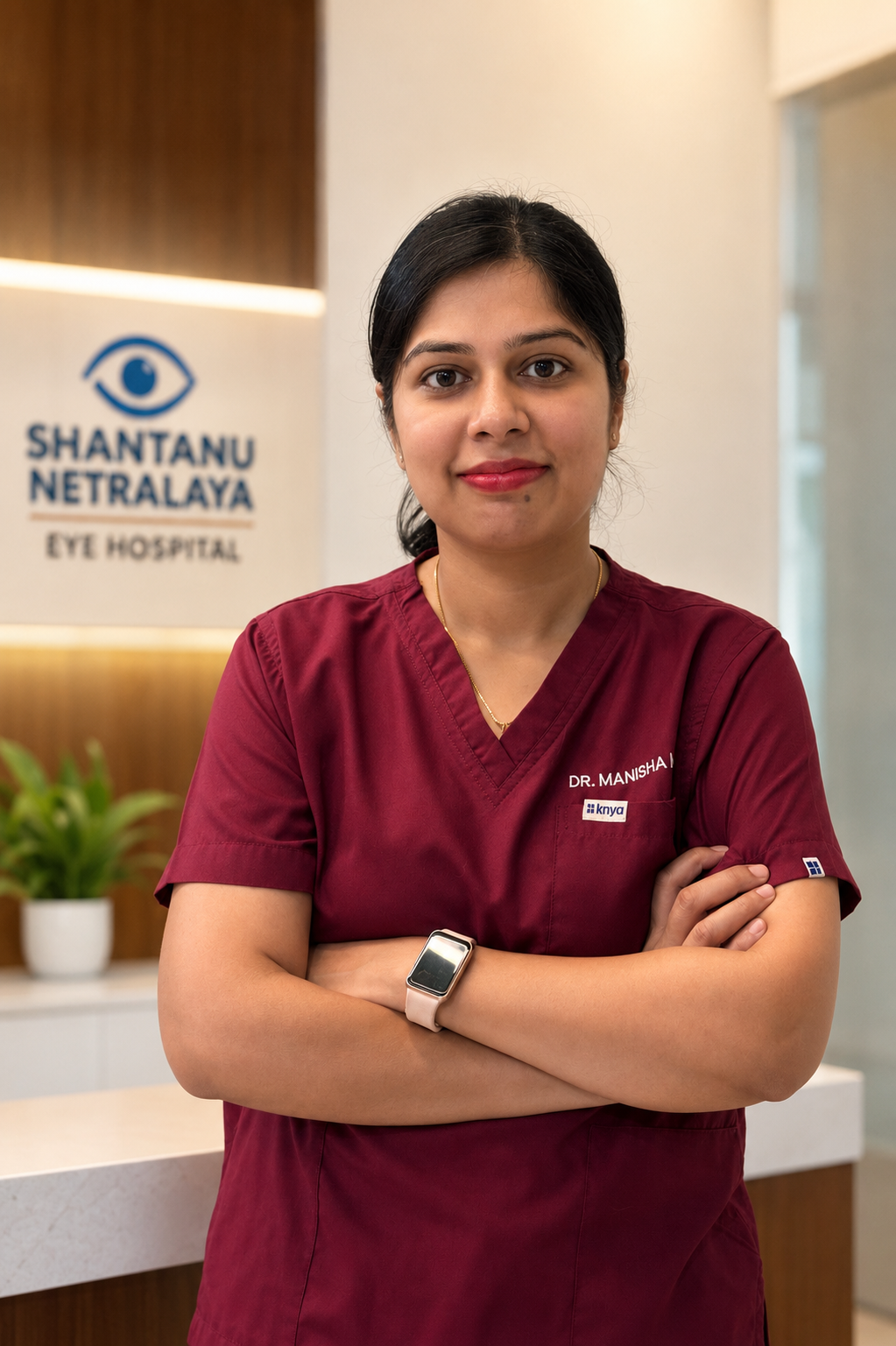
Consultant Ophthalmologist at Shantanu Netralaya Eye Hospital, Varanasi. MBBS Gold Medalist with 4 distinctions; MS Ophthalmology from Maulana Azad Medical College & Guru Nanak Eye Centre, New Delhi. Handles complex cataract, squint (strabismus) and paediatric ophthalmology.
Related articles
Services related to this article
Bladeless, stitchless cataract surgery — MAMC-trained precision, delivered in Varanasi.
When routine cataract surgery isn't enough — MAMC-trained expertise for the difficult case.
OCT-guided diagnosis. Evidence-based treatment. Same-day injections when needed.