Can Vision Improve After Diabetic Retinopathy Treatment? | Expert Guide by Dr. Shantanu Gupta
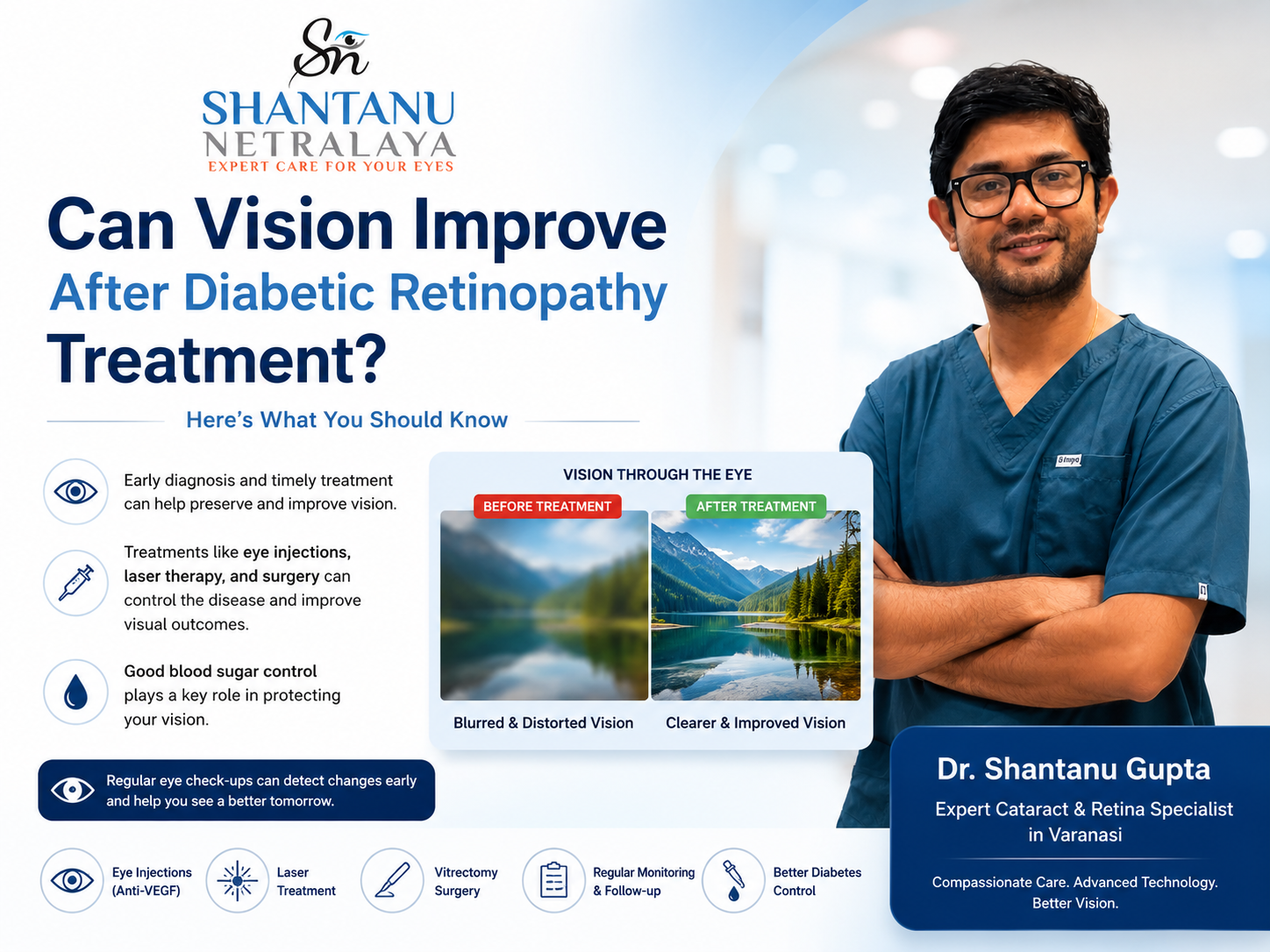
Can vision improve after diabetic retinopathy treatment? Learn how eye injections, laser treatment, and diabetes control can help preserve or improve eyesight. Expert guide by Dr. Shantanu Gupta.
What Every Person with Diabetes Should Know
By Dr. Shantanu Gupta | Expert Cataract & Retina Specialist in Varanasi
Diabetes can affect many parts of the body, but one of its most serious complications is diabetic retinopathy, a condition that damages the tiny blood vessels of the retina—the light-sensitive tissue at the back of the eye.
One of the most common questions I hear from patients is:
"Doctor, will my vision improve after treatment?"
The answer is yes, in many cases vision can improve—but it depends on several important factors, including how early the disease is diagnosed, the severity of retinal damage, and the type of treatment received.
In this article, I'll explain what diabetic retinopathy is, the available treatments, and what you can realistically expect regarding vision improvement.
What Is Diabetic Retinopathy?
Diabetic retinopathy is an eye disease caused by prolonged high blood sugar levels that damage the retina's blood vessels.
Over time, these blood vessels may:
Leak fluid or blood Become blocked Grow abnormal new blood vessels Cause swelling of the retina (diabetic macular edema) Lead to retinal detachment in advanced cases
Without timely treatment, diabetic retinopathy can result in permanent vision loss.
Can Vision Really Improve After Treatment?
Yes—but improvement is not guaranteed in every patient.
Treatment aims to:
Stop the disease from worsening Preserve existing vision Improve vision whenever possible Prevent blindness
Many patients notice clearer vision after treatment, especially when therapy begins before permanent retinal damage occurs.
However, if the retina has already suffered irreversible damage, treatment may only stabilize the condition rather than restore lost vision.
Factors That Determine Vision Improvement 1. Stage of Diabetic Retinopathy
The earlier the disease is detected, the better the chances of recovering vision.
Mild to Moderate Diabetic Retinopathy
Many patients maintain excellent vision and respond well to treatment.
Severe Diabetic Retinopathy
Vision recovery may be limited because of significant retinal damage.
Proliferative Diabetic Retinopathy (PDR)
In advanced stages, abnormal blood vessels can bleed into the eye or pull on the retina.
Treatment can often preserve vision, but recovery depends on the extent of damage.
2. Presence of Diabetic Macular Edema (DME)
The macula is responsible for sharp central vision.
When fluid accumulates in this area, vision becomes blurred.
Fortunately, diabetic macular edema often responds well to modern treatments, and many patients experience noticeable improvement.
3. Blood Sugar Control
Even the best eye treatment cannot fully succeed if blood sugar remains poorly controlled.
Maintaining healthy glucose levels significantly improves treatment outcomes and reduces the risk of recurrence.
Good diabetes management includes:
Healthy diet Regular exercise Taking medications as prescribed Monitoring HbA1c regularly 4. Timely Treatment
Delaying treatment allows retinal damage to progress.
Patients who receive treatment soon after diagnosis generally achieve better visual outcomes than those who wait until vision becomes severely affected.
Treatment Options for Diabetic Retinopathy
Modern ophthalmology offers several effective treatments depending on the stage of the disease.
1. Anti-VEGF Eye Injections
These medications reduce leakage and swelling inside the retina.
They are commonly used for:
Diabetic macular edema Proliferative diabetic retinopathy
Many patients experience gradual improvement in vision after a series of injections.
However, multiple injections may be required over time.
2. Retinal Laser Treatment
Laser treatment seals leaking blood vessels and reduces the growth of abnormal new vessels.
Its primary goal is to:
Prevent further vision loss Reduce the risk of severe bleeding Preserve remaining vision
Laser treatment usually stabilizes vision rather than dramatically improving it.
3. Vitrectomy Surgery
In advanced diabetic eye disease, blood may fill the vitreous cavity or scar tissue may pull on the retina.
Vitrectomy surgery removes the blood and scar tissue, allowing light to reach the retina again.
Many patients notice improved vision after surgery, although recovery depends on how healthy the retina remains.
How Soon Does Vision Improve?
Recovery varies from person to person.
After Eye Injections
Some patients notice improvement within a few weeks, while others require several injections before experiencing clearer vision.
After Laser Treatment
Vision may remain stable initially. The main purpose of laser treatment is to prevent further deterioration.
After Vitrectomy Surgery
Visual recovery often occurs gradually over several weeks to months.
Patience is important, as the retina continues healing after treatment.
When Vision May Not Fully Recover
Unfortunately, not every patient regains normal vision.
Permanent vision loss may occur if diabetic retinopathy has caused:
Severe macular damage Long-standing retinal swelling Extensive retinal ischemia Retinal detachment Optic nerve damage
Even in these situations, treatment remains essential because it can prevent additional vision loss.
What You Can Do to Protect Your Vision
Treatment works best when combined with good diabetes control.
Here are some important steps:
✅ Keep blood sugar under control
✅ Monitor HbA1c regularly
✅ Control blood pressure
✅ Manage cholesterol levels
✅ Avoid smoking
✅ Exercise regularly
✅ Eat a balanced diet
✅ Never miss scheduled eye appointments
Warning Signs You Should Never Ignore
Contact an eye specialist immediately if you experience:
Sudden blurred vision Black spots or floaters Flashes of light Dark curtain over vision Sudden vision loss Distorted or wavy vision
Early treatment can make a significant difference.
Can Diabetic Retinopathy Be Cured?
Diabetic retinopathy cannot be completely cured.
However, it can be effectively managed with modern treatments.
Many patients continue to enjoy useful vision for years by:
Following their treatment plan Controlling diabetes Attending regular retinal examinations Frequently Asked Questions (FAQs) Can eyesight improve after diabetic retinopathy treatment?
Yes. Many patients experience improved vision, particularly when treatment begins early. The extent of recovery depends on the severity of retinal damage and the type of treatment received.
How many eye injections will I need?
The number varies from person to person. Some patients require only a few injections, while others may need ongoing treatment depending on their retinal condition.
Is laser treatment better than eye injections?
Not necessarily. Each treatment has a different purpose. Your retina specialist will recommend the most appropriate option based on your specific condition.
Can diabetic retinopathy return after treatment?
Yes. Diabetes is a lifelong condition, and diabetic retinopathy can recur if blood sugar remains uncontrolled. Regular follow-up examinations are essential.
Can good diabetes control improve vision?
Good blood sugar control cannot reverse existing retinal damage, but it can slow disease progression and improve the effectiveness of treatment.
Final Thoughts
Modern treatments for diabetic retinopathy have transformed the outlook for people with diabetes.
With timely diagnosis, advanced therapies, and good diabetes control, many patients are able to preserve their vision—and some experience significant improvement.
The key is not to wait until vision becomes severely affected.
If you have diabetes, schedule a comprehensive dilated retinal examination every year, even if your vision seems normal. Early detection remains the most effective way to protect your eyesight.
About the Author
Dr. Shantanu Gupta is an Expert Cataract & Retina Specialist in Varanasi, specializing in the diagnosis and treatment of diabetic retinopathy, diabetic macular edema, retinal vascular diseases, age-related macular degeneration, retinal detachment, and advanced cataract surgery.
He is dedicated to providing evidence-based, patient-centered eye care using modern diagnostic technology, retinal imaging, intravitreal injections, laser treatments, and vitreoretinal surgery referrals when required.
If you have diabetes or are experiencing changes in your vision, a timely retinal examination can help detect problems early and protect your eyesight.
This article is for patient education. It is not a substitute for personalised medical advice, examination or diagnosis. If you have symptoms discussed here, please book an in-person consultation with a qualified ophthalmologist.
Dr. Shantanu personally reviews every enquiry — usually within a few hours.
Message on WhatsApp
Consultant Ophthalmologist at Shantanu Netralaya Eye Hospital, Varanasi. New Delhi (MAMC / Guru Nanak Eye Centre) trained cataract, cornea and medical retina specialist. FICO (Merit).
