Dr. Manisha Mishra | Cataract, Pediatric Ophthalmology & Squint Specialist in Varanasi
Dr. Manisha Mishra is a cataract, pediatric ophthalmology and squint specialist in Varanasi, with expertise in cataract surgery, children's eye care, strabismus and amblyopia.
Dr. Manisha Mishra: Pediatric Ophthalmologist, Squint & Cataract Specialist in Varanasi
When it comes to eye care, children are not simply “small adults.”
A child's visual system is still developing, and problems such as squint, refractive error, lazy eye (amblyopia) and other childhood eye conditions can affect visual development if they are not recognised and managed appropriately.
This is why choosing an ophthalmologist with specific experience in pediatric ophthalmology and squint can be particularly important.
At Shantanu Netralaya, Varanasi, Dr. Manisha Mishra brings specialised expertise in Pediatric Ophthalmology, Squint & Strabismus, Cataract Surgery and Comprehensive Eye Care.
Her clinical approach combines specialist training from one of India's leading ophthalmology institutions with a patient-centred approach to children, adults and families.
Who is Dr. Manisha Mishra?
Dr. Manisha Mishra is an ophthalmologist based at Shantanu Netralaya, Varanasi, with particular expertise in:
Pediatric Ophthalmology
Squint / Strabismus
Squint Surgery
Amblyopia / Lazy Eye
Childhood Refractive Errors
Adult Squint
Cataract Surgery
Complex Cataract
Comprehensive Eye Care
She completed her MBBS from Mahatma Gandhi Medical College, Indore, where she received four distinctions and gold medals in Biochemistry, Pharmacology, Ophthalmology and Pediatrics.
She subsequently pursued postgraduate training in ophthalmology at Maulana Azad Medical College (MAMC), New Delhi, one of India's leading medical institutions.
Her training and academic background have helped her develop a particular interest in managing eye conditions affecting children as well as patients with squint and cataract.
Why Pediatric Ophthalmology is Different
Children may not always realise that their vision is abnormal.
An adult who develops blurred vision can usually describe the problem.
A young child may simply adapt to seeing poorly.
This is particularly important when vision in one eye is significantly poorer than the other.
The brain learns to use the clearer image and may gradually suppress the image coming from the weaker eye. This can contribute to amblyopia, commonly called lazy eye.
Early identification and appropriate treatment can therefore be important during childhood.
A pediatric ophthalmologist evaluates not only whether a child can see clearly, but also whether the two eyes are working together properly and whether vision is developing normally.
When Should Parents Take a Child for an Eye Examination?
Parents should consider an ophthalmic evaluation if they notice:
One eye turning in or out
Eyes that do not appear properly aligned
Frequent closing of one eye
Head tilting while looking at objects
Sitting unusually close to the television
Difficulty seeing the classroom board
Difficulty reading
Frequent eye rubbing
Complaints of headaches or visual discomfort
Poor performance at school that may be related to vision
A noticeable difference between the two eyes
White reflex or unusual appearance of the pupil
Any sudden change in vision
Not every child with these symptoms will have a serious eye problem.
However, an appropriate examination can help determine whether further treatment or observation is required.
Dr. Manisha Mishra and Squint Treatment in Varanasi
Squint, medically known as strabismus, occurs when the two eyes are not properly aligned.
One eye may turn inward, outward, upward or downward, either constantly or intermittently.
Squint can occur in children as well as adults.
It is sometimes assumed to be only a cosmetic problem.
But in children, squint can interfere with the normal development of binocular vision and may be associated with amblyopia.
In adults, squint may be associated with double vision, difficulty with binocular vision or problems with eye alignment.
Dr. Manisha Mishra's practice includes evaluation and management of both pediatric and adult squint.
What Treatments Are Available for Squint?
There is no single treatment that is appropriate for every type of squint.
Depending on the patient's age, type of deviation, cause and visual status, treatment may include:
Glasses
Refractive correction can be an important part of managing certain types of squint.
Amblyopia Treatment
If one eye has weaker vision, treatment may be required to encourage the brain to use the weaker eye.
This may include patching or other methods depending on the individual child.
Prisms
In selected adult patients, prism correction may help manage certain forms of double vision or eye misalignment.
Observation
Some forms of squint may require monitoring rather than immediate intervention.
Squint Surgery
When appropriate, surgery can be used to adjust the position and function of the extraocular muscles to improve eye alignment.
The decision to operate depends on detailed assessment rather than simply the appearance of the eyes.
Does Squint Surgery Improve Vision?
This is an important distinction.
Squint surgery primarily aims to improve eye alignment.
In children with amblyopia, additional treatment may be required to improve vision in the weaker eye.
Therefore, treating squint and treating amblyopia are related but not always the same thing.
This is one reason why children with squint benefit from a comprehensive ophthalmic assessment rather than treating the problem as purely cosmetic.
Pediatric Eye Problems Should Not Always Be “Wait and Watch”
One of the most common concerns parents have is:
“Will the squint disappear as the child grows?”
The answer depends on the type and cause of the squint.
Some childhood eye alignment problems may change as the child grows, while others require glasses, amblyopia treatment, surgery or continued monitoring.
Therefore, rather than assuming that a squint will disappear on its own, it is better to have the child's eyes evaluated.
Early diagnosis can help determine whether treatment is required and, importantly, whether normal visual development is being affected.
Lazy Eye (Amblyopia): Why Early Treatment Matters
Amblyopia, commonly called lazy eye, occurs when vision in one eye—or sometimes both eyes—does not develop normally during childhood.
It can be associated with:
Squint
Significant difference in spectacle power between the two eyes
High refractive errors
Cataract or other conditions that interfere with vision during early childhood
A child with amblyopia may not complain of poor vision because the stronger eye compensates for the weaker one.
Parents may therefore remain unaware of the problem.
A pediatric eye examination can identify differences in visual function and help determine whether treatment is needed.
Treatment depends on the underlying cause and the child's age and may include appropriate spectacle correction, patching or other measures.
Refractive Errors in Children
Myopia, hypermetropia and astigmatism can occur during childhood.
Uncorrected refractive errors may interfere with a child's ability to see clearly in school and during daily activities.
Children may not always complain about blurred distance vision.
Instead, they may:
Sit close to the board
Squint to see distant objects
Sit close to the television
Hold books very close
Avoid reading
Complain of headaches
Lose interest in classroom activities
Regular vision assessment can help identify refractive errors and determine whether spectacles or other treatment is required.
Dr. Manisha Mishra's Cataract Expertise
Although Dr. Manisha Mishra has a particular clinical focus on pediatric ophthalmology and squint, her expertise also includes cataract surgery and comprehensive adult eye care.
Cataract surgery requires careful assessment of the eye and an understanding of the patient's visual requirements.
Modern cataract surgery involves removing the cloudy natural lens and replacing it with an intraocular lens (IOL).
Depending on the patient's individual needs, different IOL options may be considered.
These can include:
Monofocal IOLs
Toric IOLs
EDOF IOLs
Multifocal / Trifocal IOLs
However, not every lens is appropriate for every patient.
The final choice depends on factors including corneal and retinal health, refractive status, lifestyle and visual expectations.
Cataract Surgery in Younger and More Complex Patients
Cataract does not occur only in elderly patients.
Children and younger adults can also develop cataract for a variety of reasons.
Pediatric and developmental cataract cases can require a different approach from routine age-related cataract.
Similarly, patients with coexisting eye conditions may require more detailed preoperative planning.
Dr. Manisha Mishra's combination of cataract experience and pediatric ophthalmology expertise allows these patients to be evaluated with their broader visual development and eye health in mind.
An Academic Foundation from MAMC, New Delhi
One of the important aspects of Dr. Manisha Mishra's professional background is her postgraduate training at Maulana Azad Medical College (MAMC), New Delhi.
MAMC and its associated hospitals provide exposure to a large and diverse patient population and a broad range of ophthalmic conditions.
This type of training is particularly valuable in specialties such as pediatric ophthalmology and squint, where patients may present with very different patterns of eye deviation, refractive error and visual development.
Her academic achievements began during medical school, where she received distinctions and gold medals in multiple subjects.
Her professional training subsequently developed her interests in pediatric eye care, squint, cataract and comprehensive ophthalmology.
Making Children's Eye Examinations More Comfortable
A child's experience during an eye examination can be very different from that of an adult.
Children may be anxious about unfamiliar surroundings, eye drops or examination instruments.
A successful pediatric consultation therefore requires more than simply performing a set of tests.
It requires communication with both:
the child
and
the parents.
The goal is to explain what is happening in an age-appropriate manner while obtaining the information needed to assess the child's vision and eye health.
Parents are also an important source of information because they may have noticed changes in the child's behaviour or eye alignment that the child cannot describe.
A Family Approach to Eye Care at Shantanu Netralaya
Dr. Manisha Mishra is part of the ophthalmology team at Shantanu Netralaya, a family-led eye-care practice in Varanasi.
The practice was founded by Dr. Rajesh Gupta, who began his ophthalmology practice in Varanasi in 1990 after completing his postgraduate training at Banaras Hindu University.
Today, the next generation has expanded the practice into a multidisciplinary eye-care centre.
Dr. Shantanu Kumar Gupta focuses particularly on cataract, cornea and medical retina.
Dr. Manisha Mishra brings expertise in pediatric ophthalmology, squint, cataract and comprehensive eye care.
This combination allows patients and families to access different areas of ophthalmic expertise within the same practice.
Why Choose a Pediatric Ophthalmologist for Your Child?
Parents often wonder whether their child's eye problem can be assessed by any general eye doctor.
Many routine childhood eye problems can certainly be evaluated by an ophthalmologist.
However, children with squint, amblyopia, complex refractive errors, developmental eye problems or other specialised conditions may benefit from assessment by an ophthalmologist with particular expertise in pediatric ophthalmology and strabismus.
The reason is simple:
Children's eyes are still developing.
The aim is not only to make the child see clearly today.
It is also to protect the development of good vision and binocular function as the child grows.
A Patient-Centred Approach to Squint
Squint can affect more than the position of the eyes.
For a child, visible eye misalignment may affect confidence and social interaction.
For an adult, it may affect professional or social interactions and, in some cases, cause double vision.
Treatment should therefore consider both the medical and functional aspects of the condition.
Dr. Manisha Mishra evaluates patients individually and discusses appropriate treatment options based on the type of squint, visual status, age and expectations.
Dr. Manisha Mishra's Patient Education Work
Patient education is an important part of managing eye disease.
Many parents and patients hear the word “squint” and immediately think of surgery.
But squint management can involve several different approaches, and surgery is not automatically required in every case.
To help patients understand these issues, Dr. Manisha Mishra has authored:
Squint Simplified: A Complete Guide for Patients
The book is written to explain squint, its evaluation and available treatment options in language that patients and families can understand.
It is intended to help patients become better informed before discussing their individual condition with an ophthalmologist.
Serving Varanasi and Purvanchal
Shantanu Netralaya is located in Durgakund, Varanasi, and serves patients from Varanasi as well as surrounding areas of Purvanchal.
Families seeking specialist consultation for:
Childhood eye problems
Squint
Lazy eye
Pediatric refractive errors
Adult squint
Cataract
can consult Dr. Manisha Mishra for an appropriate ophthalmic evaluation.
Frequently Asked Questions About Dr. Manisha Mishra
What is Dr. Manisha Mishra's speciality?
Dr. Manisha Mishra is an ophthalmologist with particular expertise in Pediatric Ophthalmology, Squint/Strabismus and Cataract Surgery.
Does Dr. Manisha Mishra treat squint in children?
Yes. Her clinical practice includes evaluation and management of pediatric squint and strabismus, including cases that may require squint surgery.
Does she treat adult squint?
Yes. Adult patients with squint and eye alignment problems can also be evaluated.
Does Dr. Manisha Mishra perform cataract surgery?
Yes. Cataract surgery is one of her areas of clinical expertise in addition to pediatric ophthalmology and squint.
When should a child with squint see an eye specialist?
A child with a persistent or intermittent eye deviation should be evaluated rather than assuming that it will disappear with age. The appropriate timing and treatment depend on the underlying cause and the child's visual development.
Can squint be treated without surgery?
In some patients, yes. Treatment may include glasses, amblyopia treatment, prisms, observation or other measures. Surgery is considered when clinically appropriate.
Is squint only a cosmetic problem?
Not always. In children, squint can be associated with amblyopia and abnormal binocular visual development. In adults, it may also cause double vision or other functional problems.
Dr. Manisha Mishra — Specialist Eye Care for Children and Adults
Good eye care begins with understanding that every patient is different.
For a child, the priority may be protecting visual development.
For a patient with squint, it may be improving alignment and binocular function.
For a cataract patient, it may be achieving the best possible visual outcome with an appropriate IOL.
Dr. Manisha Mishra brings these different aspects of ophthalmology together through her training and clinical practice in Pediatric Ophthalmology, Squint, Cataract and Comprehensive Eye Care.
At Shantanu Netralaya, her work forms an important part of the hospital's broader approach to specialist eye care in Varanasi and Purvanchal.
If your child has a squint, lazy eye, difficulty seeing clearly or another concern about their vision, an appropriate pediatric eye examination can help determine what is actually happening and whether treatment is required.
Dr. Manisha Mishra
MBBS — Mahatma Gandhi Medical College, Indore
MS Ophthalmology — Maulana Azad Medical College, New Delhi
DNB · FICO (Merit)
Areas of Expertise:
Pediatric Ophthalmology · Squint & Strabismus · Squint Surgery · Amblyopia · Pediatric Refractive Errors · Adult Squint · Cataract Surgery · Comprehensive Eye Care
Shantanu Netralaya Eye Hospital
40, Deen Dayal Colony, Kabir Nagar Road, Near Durgakund, Varanasi – 221005
Serving: Varanasi · Kashi · Purvanchal and surrounding regions
Medical Disclaimer
This article is intended for general patient education and does not replace an individual ophthalmic examination. Treatment for squint, amblyopia, pediatric eye conditions and cataract varies according to the individual patient and should be determined after appropriate clinical evaluation.
This article is for patient education. It is not a substitute for personalised medical advice, examination or diagnosis. If you have symptoms discussed here, please book an in-person consultation with a qualified ophthalmologist.
Dr. Shantanu personally reviews every enquiry — usually within a few hours.
Message on WhatsApp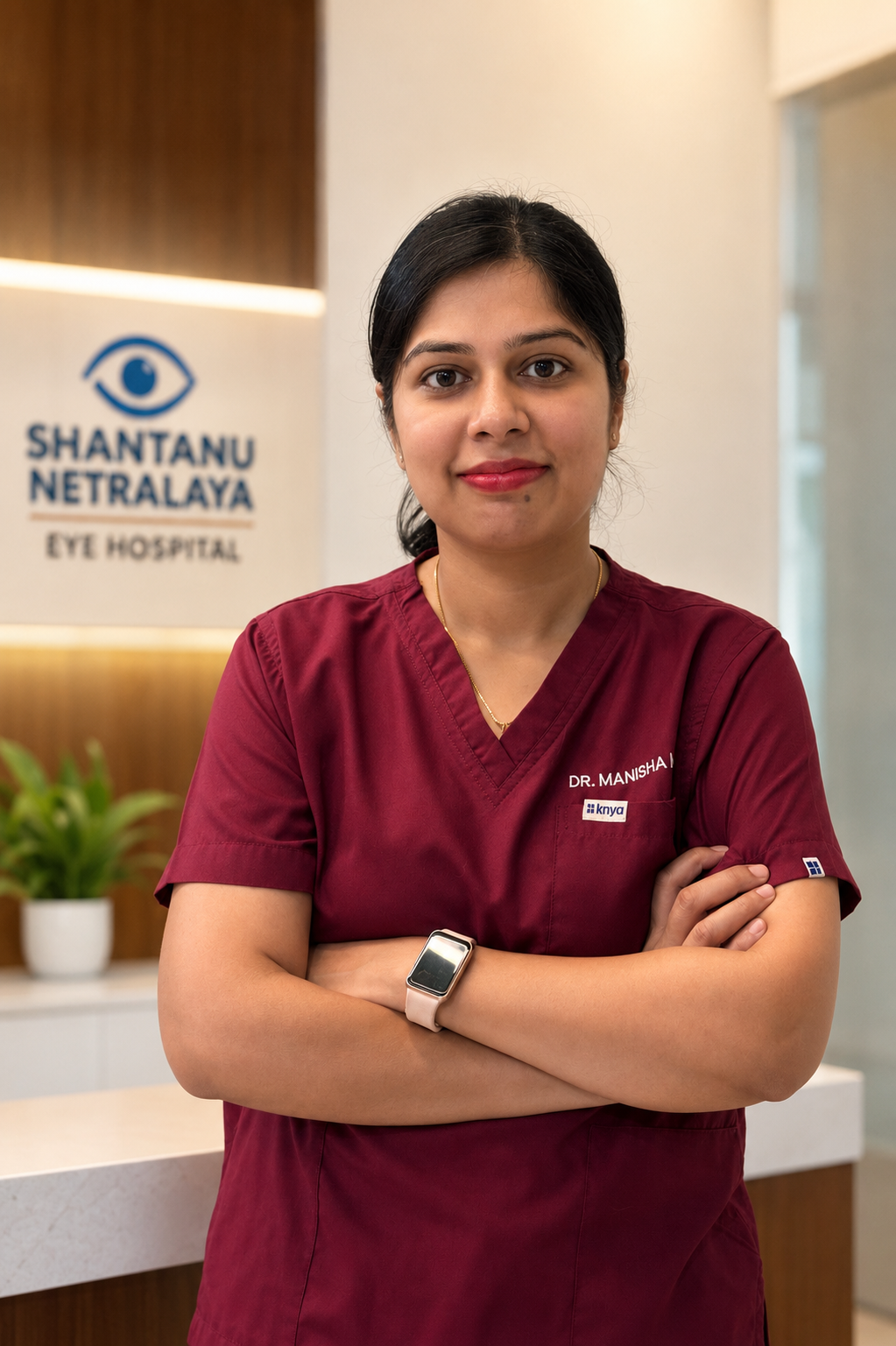
Consultant Ophthalmologist at Shantanu Netralaya Eye Hospital, Varanasi. MBBS Gold Medalist with 4 distinctions; MS Ophthalmology from Maulana Azad Medical College & Guru Nanak Eye Centre, New Delhi. Handles complex cataract, squint (strabismus) and paediatric ophthalmology.
Services related to this article
Bladeless, stitchless cataract surgery — MAMC-trained precision, delivered in Varanasi.
When routine cataract surgery isn't enough — MAMC-trained expertise for the difficult case.
Cosmetic and functional squint correction — for children, teens and adults.