Best Cataract Surgeon in Varanasi: What to Look For
Choosing the right cataract surgeon is essential for achieving the best visual outcome. Learn what factors matter most, from surgical expertise and advanced technology to personalized lens selection, in this expert guide by Dr. Shantanu Gupta, Cataract & Retina Specialist in Varanasi.
Best Cataract Surgeon in Varanasi: What to Look For Before Choosing Your Eye Doctor
By Dr. Shantanu Gupta | Expert Cataract & Retina Specialist in Varanasi
Cataract surgery is one of the most commonly performed surgeries worldwide and has helped millions of people regain clear vision. Thanks to advances in technology, modern cataract surgery is now safer, more precise, and offers faster recovery than ever before.
However, the success of your surgery depends on more than just the procedure itself. Choosing the right cataract surgeon is one of the most important decisions you will make.
If you are searching for the best cataract surgeon in Varanasi, this guide will help you understand what truly matters when selecting your eye specialist.
What Is a Cataract?
A cataract occurs when the natural lens inside the eye becomes cloudy, causing blurred vision, glare, poor night vision, and difficulty performing daily activities.
The only effective treatment is cataract surgery, in which the cloudy lens is removed and replaced with a clear artificial intraocular lens (IOL).
Why Choosing the Right Cataract Surgeon Matters
Modern cataract surgery is highly successful, but every eye is unique.
An experienced surgeon does much more than remove the cataract. They carefully evaluate your eyes, recommend the most suitable lens, identify any underlying eye conditions, and aim to deliver the best possible visual outcome.
A skilled cataract surgeon focuses on:
Accurate diagnosis Personalized treatment planning Safe surgical techniques Appropriate lens selection Long-term visual quality 8 Things to Look for in the Best Cataract Surgeon in Varanasi 1. Experience and Expertise
One of the first things to consider is the surgeon's experience.
A surgeon who performs cataract surgery regularly is familiar with different types of cataracts, varying eye conditions, and unexpected situations that may arise during surgery.
Experience often contributes to greater precision and confidence in managing both routine and complex cases.
2. Advanced Diagnostic Technology
Successful cataract surgery begins long before entering the operating room.
Modern eye hospitals use advanced diagnostic equipment to calculate the exact power of the intraocular lens (IOL).
Look for hospitals that offer technologies such as:
Optical Biometry Corneal Topography OCT (Optical Coherence Tomography) when indicated Modern Phacoemulsification Systems
Accurate measurements are essential for achieving excellent visual outcomes.
3. Personalized Lens Selection
Not every patient needs the same lens.
A good cataract surgeon will explain the available options, including:
Monofocal lenses Enhanced monofocal lenses Toric lenses for astigmatism EDOF (Extended Depth of Focus) lenses Multifocal and trifocal lenses
The right choice depends on your:
Lifestyle Occupation Daily activities Eye health Visual expectations
A personalized recommendation is more valuable than simply choosing the most expensive lens.
4. Comprehensive Eye Examination
A cataract may not be the only cause of poor vision.
Conditions such as:
Diabetic retinopathy Glaucoma Macular degeneration Corneal disorders
can also affect vision.
A thorough eye examination ensures that these conditions are diagnosed and managed appropriately before surgery.
5. Transparent Communication
A trustworthy surgeon takes the time to answer your questions.
You should understand:
Why surgery is recommended Which lens is best for your eyes Expected recovery time Benefits and possible limitations Post-operative care
Good communication helps patients make informed decisions and feel confident about their treatment.
6. Patient Reviews and Reputation
Reading genuine patient reviews can provide insight into:
Surgical outcomes Doctor-patient communication Staff behaviour Hospital cleanliness Overall patient experience
While reviews should not be the only deciding factor, they can help you understand what other patients have experienced.
7. Modern Operation Theatre and Safety Standards
A well-equipped operation theatre with strict sterilization protocols significantly contributes to patient safety.
Choose a hospital that follows high standards of infection control and uses modern surgical equipment.
8. Complete Post-Operative Care
Your relationship with your surgeon doesn't end after the operation.
Proper follow-up visits help monitor healing, optimize vision, and address any concerns during recovery.
Good post-operative care is an important part of successful cataract surgery.
Questions You Should Ask Before Cataract Surgery
During your consultation, consider asking:
Which type of cataract do I have? Which lens do you recommend for me? Will I need glasses after surgery? Do I have astigmatism? How long is the recovery? When can I return to work? What precautions should I follow after surgery?
A good surgeon will answer these questions patiently and honestly.
Does the Most Expensive Lens Guarantee Better Vision?
No.
The best lens is the one that matches your eye health and lifestyle.
For example, some patients with retinal disease or advanced glaucoma may achieve better outcomes with a premium monofocal lens rather than a multifocal lens.
The goal is always to choose the most appropriate lens, not necessarily the costliest one.
Should You Delay Cataract Surgery?
Many patients wait until vision becomes severely affected before seeking treatment.
Delaying surgery for too long may:
Make daily activities difficult Increase the risk of falls Reduce quality of life Lead to denser cataracts that can be more challenging to remove
If cataracts are interfering with your daily routine, it is advisable to consult an experienced eye specialist.
Why Local Expertise Matters
Choosing a cataract surgeon in your city offers several advantages:
Easy access for consultations Convenient follow-up visits Better continuity of care Immediate assistance if needed after surgery
For patients in Varanasi and nearby districts, having an experienced cataract specialist close to home can make the treatment journey smoother and more reassuring.
Final Thoughts
When searching for the best cataract surgeon in Varanasi, don't focus only on advertisements or price.
Instead, look for a surgeon who offers:
Experience and expertise Advanced diagnostic technology Personalized lens recommendations Honest communication Comprehensive eye examinations High standards of patient care Modern surgical facilities Dedicated follow-up care
Remember, cataract surgery is not just about removing a cloudy lens—it's about restoring clear vision and improving your quality of life.
Choosing the right surgeon is the first step toward achieving the best possible outcome.
Frequently Asked Questions (FAQs) How do I choose the best cataract surgeon in Varanasi?
Look for an experienced ophthalmologist who performs cataract surgery regularly, uses modern diagnostic technology, offers personalized lens recommendations, and has positive patient reviews.
Is cataract surgery safe?
Yes. Modern cataract surgery is one of the safest and most successful surgical procedures when performed by an experienced eye surgeon.
Which lens is best for cataract surgery?
There is no single best lens for everyone. The ideal intraocular lens (IOL) depends on your lifestyle, visual needs, eye health, and expectations after surgery.
How long does cataract surgery take?
Most cataract surgeries take approximately 15–30 minutes, and patients usually return home the same day.
Will I need glasses after cataract surgery?
It depends on the type of lens implanted and your individual eye condition. Some patients may still require glasses for reading or specific tasks.
About the Author
Dr. Shantanu Gupta is an Expert Cataract and Retina Specialist in Varanasi with extensive experience in advanced cataract surgery, premium intraocular lenses (IOLs), diabetic eye disease, and retinal disorders. He is committed to delivering evidence-based, patient-focused eye care using modern technology and personalized treatment plans.
If you are considering cataract surgery, a detailed consultation can help determine the most suitable treatment and lens option for your eyes.
This article is for patient education. It is not a substitute for personalised medical advice, examination or diagnosis. If you have symptoms discussed here, please book an in-person consultation with a qualified ophthalmologist.
Dr. Shantanu personally reviews every enquiry — usually within a few hours.
Message on WhatsApp
Consultant Ophthalmologist at Shantanu Netralaya Eye Hospital, Varanasi. New Delhi (MAMC / Guru Nanak Eye Centre) trained cataract, cornea and medical retina specialist. FICO (Merit).
Related articles
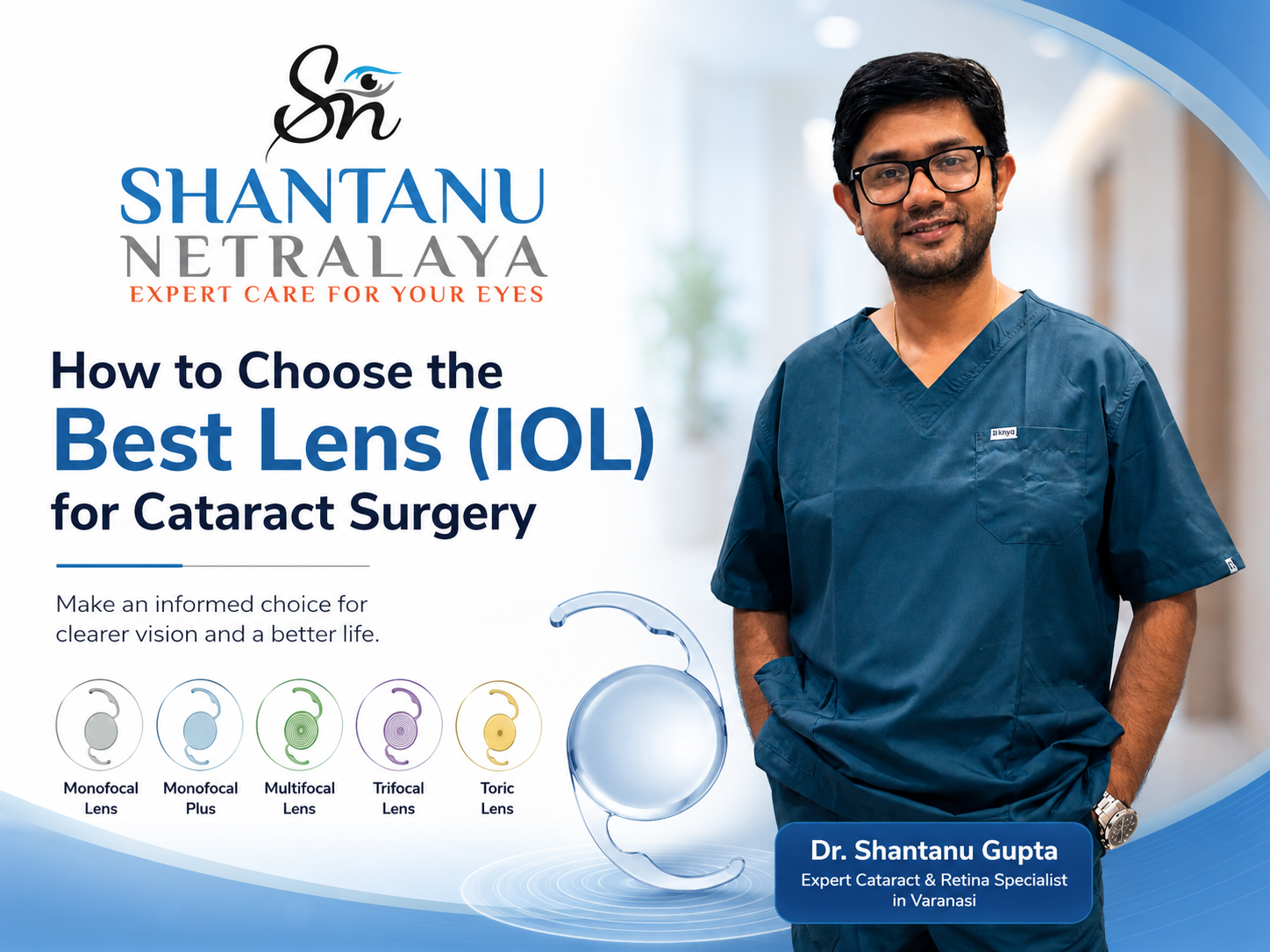
How to Choose the Best Lens (IOL) for Cataract Surgery: A Complete Patient Guide
ReadWhich Cataract Surgery Lens Is Right for You? Try Our Free Cataract Lens Selection Tool
ReadWhich Cataract Surgery Lens Implant Is Right for You? Expert Guide | Varanasi
ReadServices related to this article
Bladeless, stitchless cataract surgery — MAMC-trained precision, delivered in Varanasi.
When routine cataract surgery isn't enough — MAMC-trained expertise for the difficult case.