Understanding Cataract: Causes, Symptoms and Modern Treatment
Overview
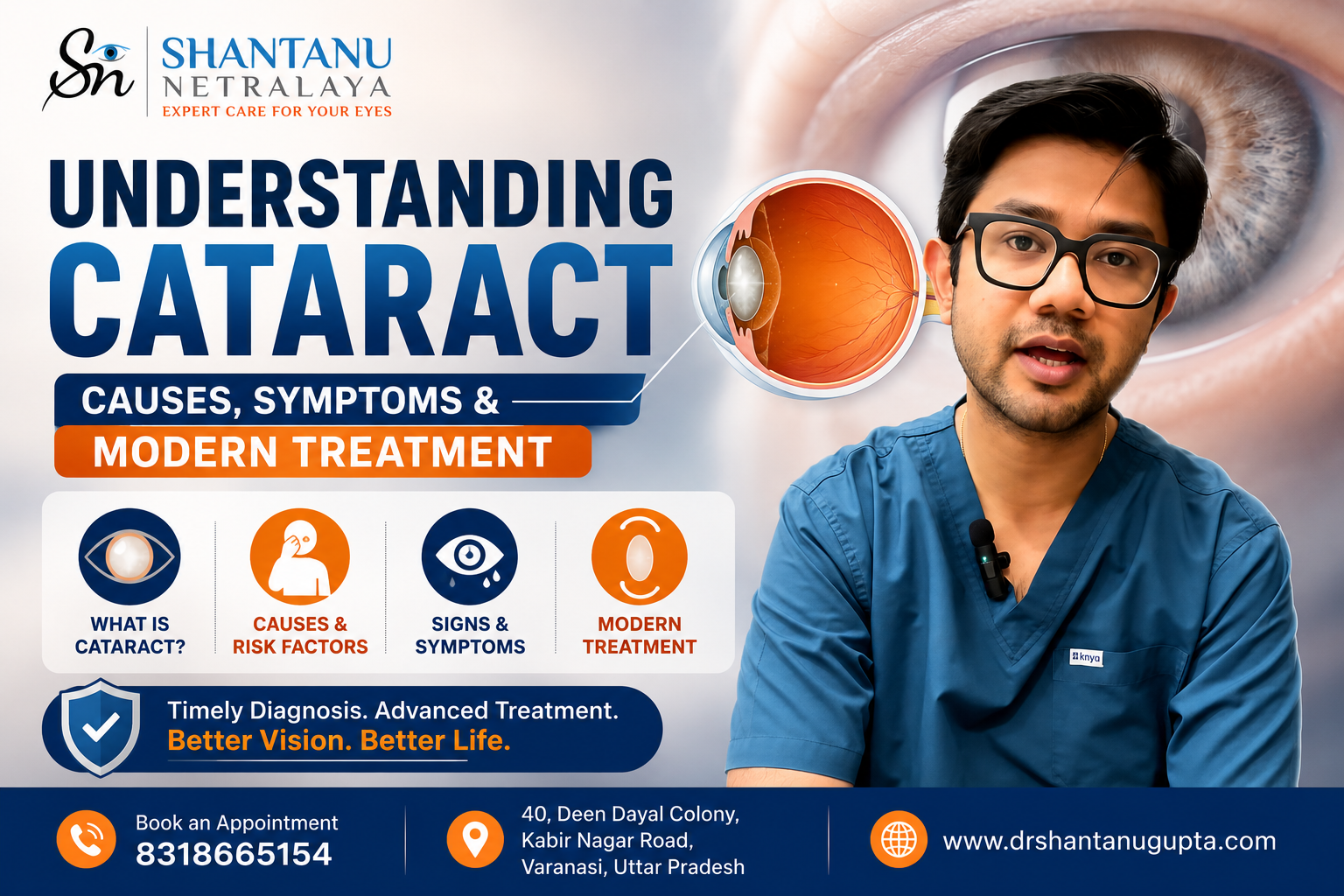
Cataract is a painless, progressive clouding of the eye's natural lens. It is the single largest cause of reversible blindness worldwide and affects nearly every human who lives long enough. Fortunately, cataract is one of the most successfully treated conditions in all of medicine.
Symptoms
- ◆Gradual painless blurring of vision
- ◆Increased glare from headlights or sunlight
- ◆Colours appear dull or yellow
- ◆Frequent change in spectacle number
- ◆Difficulty reading in dim light
- ◆Double vision in one eye
Causes
- ◆Ageing (most common)
- ◆Diabetes mellitus
- ◆Long-term steroid use
- ◆Trauma to the eye
- ◆Prolonged UV exposure
- ◆Congenital or inherited
Risk factors
- ◆Age above 55
- ◆Diabetes
- ◆Smoking and alcohol
- ◆Family history
- ◆Previous eye surgery or injury
Diagnosis
Diagnosis is made by an ophthalmologist using a slit-lamp examination after dilating the pupil. Additional optical biometry is performed once surgery is planned, to calculate the exact lens power required.
Treatment options
Spectacles help in early cataract but the only definitive treatment is Micro-Incision Cataract Surgery (MICS) with intraocular lens implantation. The procedure is stitch-less stitch-less and takes 10-15 minutes.
When to see a doctor
See an eye specialist as soon as blurred vision, glare or frequent number changes affect daily activities such as reading, driving or recognising faces.
Prevention
Cataract cannot be prevented but progression can be slowed by wearing UV-blocking sunglasses, controlling diabetes, avoiding smoking and eating a diet rich in green leafy vegetables.
Frequently Asked
References
- American Academy of Ophthalmology – Cataract Preferred Practice Pattern 2021
- All India Ophthalmological Society – Cataract Guidelines
Treatments Dr. Shantanu offers for this
This article is for patient education. It is not a substitute for personalised medical advice, examination or diagnosis. If you have symptoms discussed here, please book an in-person consultation with a qualified ophthalmologist.

Consultant Ophthalmologist at Shantanu Netralaya Eye Hospital, Varanasi. New Delhi (MAMC / Guru Nanak Eye Centre) trained cataract, cornea and medical retina specialist. FICO (Merit).


