Diabetes and Your Eyes: A Complete Patient Guide

Overview
Diabetic retinopathy is the leading cause of preventable blindness in working-age adults. It progresses silently for years, and by the time vision is affected, significant retinal damage is already present.
Symptoms
- ◆Often none in early stages
- ◆Floating dark spots or cobwebs
- ◆Blurred or fluctuating central vision
- ◆Difficulty seeing at night
- ◆Sudden loss of vision (advanced)
Causes
- ◆Chronically elevated blood sugar
- ◆Long duration of diabetes (>10 years)
- ◆Uncontrolled blood pressure
- ◆Kidney disease
Risk factors
- ◆Poor glycaemic control (HbA1c > 7)
- ◆Hypertension
- ◆Pregnancy
- ◆Hyperlipidaemia
Diagnosis
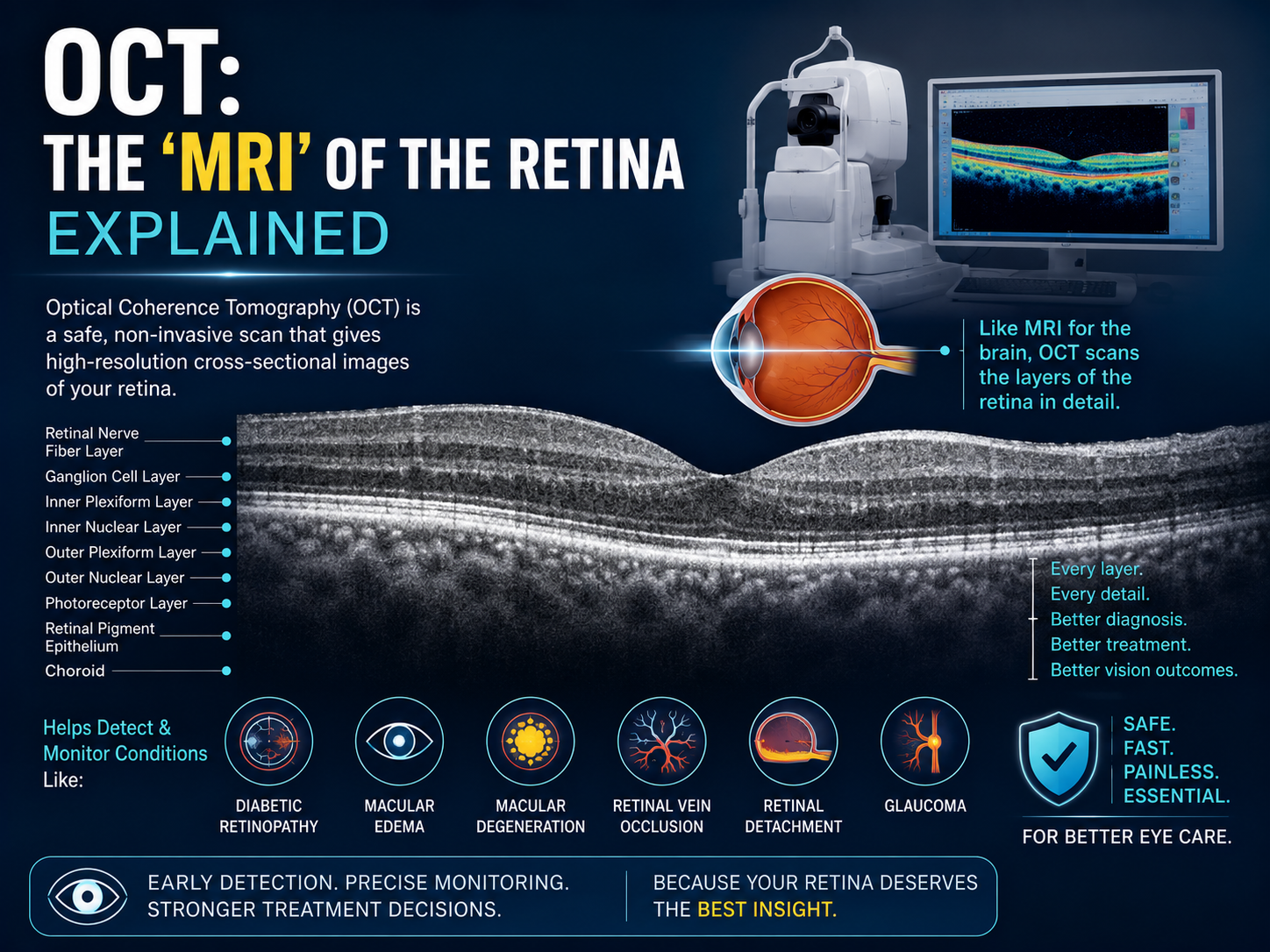
Annual dilated fundus examination is the gold standard. OCT is added for macular evaluation and fundus fluorescein angiography (FFA) for treatment planning.
Treatment options
Ranges from lifestyle optimisation and observation to intravitreal anti-VEGF injections, pan-retinal photocoagulation laser and — in advanced cases — vitreoretinal surgery.
When to see a doctor
Every person with diabetes, starting from the day of diagnosis, should have a dilated retina check-up every year — even if vision seems normal.
Prevention
Tight glycaemic control (HbA1c < 7), blood pressure management, statin therapy where indicated, no smoking and annual eye check-ups.
Frequently Asked
References
- International Diabetes Federation – Eye Health Guide 2023
Treatments Dr. Shantanu offers for this
This article is for patient education. It is not a substitute for personalised medical advice, examination or diagnosis. If you have symptoms discussed here, please book an in-person consultation with a qualified ophthalmologist.

Consultant Ophthalmologist at Shantanu Netralaya Eye Hospital, Varanasi. New Delhi (MAMC / Guru Nanak Eye Centre) trained cataract, cornea and medical retina specialist. FICO (Merit).